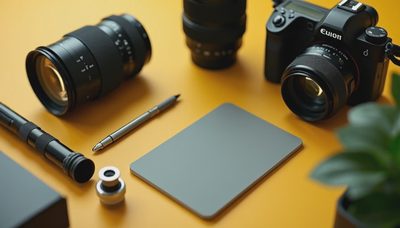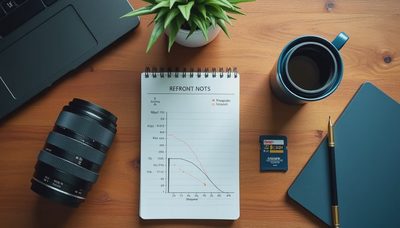
If you are learning how to choose a camera lens, you have probably discovered that the specifications can feel more confusing than helpful. Focal length, maximum aperture, optical stabilization, filter size, and mount names all compete for attention. I have tested lenses on optical benches and used them on commercial shoots, and my first advice is simple: start with the photographs you want to make, not the lens box.
A lens is not a trophy or a permanent commitment. It is a tool that controls your framing, light-gathering ability, background rendering, and working distance. The right choice for a beach walk is not necessarily right for a wedding reception or a small apartment. Once you connect each specification to a real shooting problem, the decision becomes much calmer.
Start with your subjects and shooting space
The most useful first step in how to choose a camera lens is writing down three situations you photograph often. You might choose family gatherings indoors, landscapes during travel, and close portraits. Then note how much room you usually have. A 35mm lens can be wonderfully flexible in a kitchen or on a city street, while an 85mm lens gives a flattering portrait view but requires you to step farther away.
For everyday photography, a 24mm to 35mm lens on a full-frame camera captures a broad scene without making faces look unusually stretched. A 50mm lens offers a natural, relatively simple perspective and is often an affordable first prime. For portraits, 85mm to 105mm lenses create comfortable working distance and attractive background separation. Wildlife and field sports usually call for 200mm or more, although a 70-300mm zoom can be more practical than a large professional telephoto.
Sensor size changes the result. A 35mm lens on an APS-C camera typically frames more like a 50mm lens on full frame, depending on the camera's crop factor. Micro Four Thirds cameras produce an even narrower angle of view from the same focal length. Manufacturers usually describe the actual focal length, so learn your camera system's equivalent view before comparing lenses across brands.

Understand focal length before aperture
Focal length determines angle of view, but it also affects how you work. A wide lens lets you include more of a room and can make nearby objects look large compared with the background. That can be useful for architecture, but it can also exaggerate a nose in a close portrait. A longer lens narrows the view and makes distant elements appear visually closer together, which is why it is popular for portraits and compressed landscape scenes.
Zoom lenses cover a range, such as 24-70mm or 70-200mm. They are convenient when you cannot move your feet, and modern zooms can be optically excellent. Prime lenses have one fixed focal length. They are often smaller, lighter, and available with wider apertures, but they ask you to compose by moving yourself.
When people ask me how to choose a camera lens, I often suggest identifying the focal length they already use most. Review your last few hundred photos and see whether you repeatedly shoot near 28mm, 50mm, or 85mm. That evidence is more reliable than a general claim that one focal length is best for everyone.
What aperture really changes
Aperture is the opening inside the lens. It is expressed with f-numbers such as f/1.8, f/2.8, f/4, and f/5.6. Smaller f-numbers mean a wider opening, which lets in more light and can produce a shallower depth of field. A lens set to f/1.8 can help in a dim restaurant or create a soft background behind a subject. It does not automatically make every image better; focusing becomes less forgiving, and a person's eyes may be sharp while the ears are already soft.
A constant f/2.8 zoom, such as a 24-70mm f/2.8, is valuable for events because exposure stays consistent while you zoom. It is also expensive and heavy, often costing roughly $1,000 to $2,500 depending on the system and model. A 24-70mm f/4 or a 24-105mm f/4 can cost less and weigh less, while still producing excellent images in daylight. For many travelers, the lighter option gets used more often.
Remember that depth of field also depends on distance, focal length, and sensor size. Do not buy a fast lens solely for blurred backgrounds if you normally photograph groups, where more depth of field is necessary.
Check mount, autofocus, and stabilization
Compatibility comes before image quality. A Sony E-mount lens belongs on compatible Sony mirrorless bodies, while Canon RF, Nikon Z, Fujifilm X, and Micro Four Thirds lenses use their own systems. An adapter can sometimes bridge systems, but electronic communication, autofocus, aperture control, and weather sealing may not work perfectly. Confirm the exact mount, not just the camera brand.
Autofocus behavior matters as much as a laboratory sharpness chart. For moving children, animals, or wedding moments, look for reviews that discuss tracking, focus breathing, motor noise, and performance in low light. A quiet linear motor is especially useful for video. Stabilization can reduce camera shake when you photograph stationary subjects at slower shutter speeds, but it cannot freeze a moving person. Some cameras and lenses coordinate their stabilization; others rely on only one system.
This is another practical part of how to choose a camera lens: decide whether your problem is camera movement or subject movement. A stabilized 24-105mm lens can help with a dim street scene. It will not stop a dancer's hands from blurring, where a wider aperture or faster shutter speed is more important.
Compare size, price, and the lens you will carry
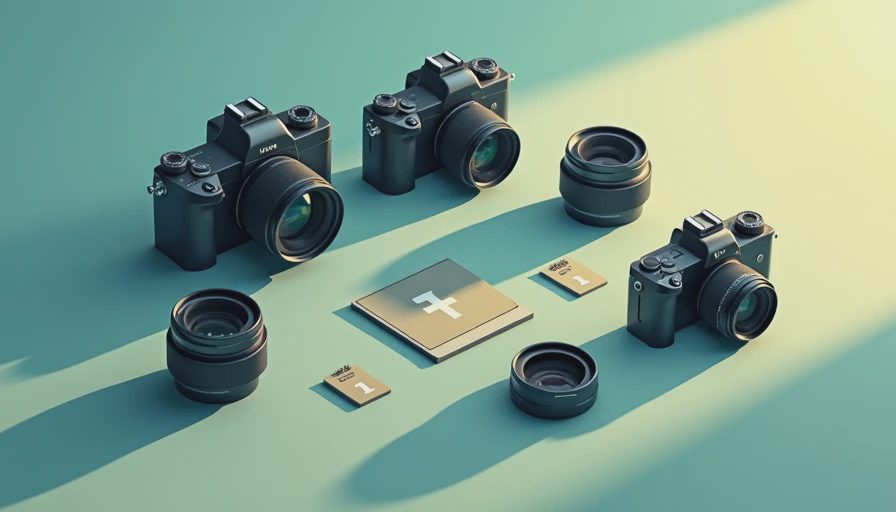
A lens that stays at home is not a successful purchase. Before buying, compare weight and length alongside price. A compact 35mm f/1.8 may weigh around 300 grams, while a professional 24-70mm f/2.8 can approach 800 grams or more. That difference is obvious after a full day walking through a museum or airport.
Also budget for practical extras. Some lenses require a hood, and a circular polarizer can be useful for reducing reflections on foliage or water. Filters should match the lens diameter, such as 67mm or 77mm. Used gear from established dealers can reduce the cost substantially, but inspect the glass for haze, fungus, deep scratches, and uneven focus. Minor exterior marks are usually less concerning than damaged optics or a loose zoom ring.
Third-party choices from Sigma, Tamron, and Viltrox can offer strong value, but verify mount support and firmware compatibility. Brand-name lenses are not automatically better, and a third-party lens is not automatically a compromise. Read comparisons made with your camera system rather than relying on a score from a different mount.
A simple buying process
Here is how to choose a camera lens without getting pulled into upgrade anxiety. First, identify your three most common subjects. Second, choose the focal-length range that fits your working distance. Third, decide whether you need a wide aperture for low light or background control. Fourth, confirm mount and autofocus compatibility. Fifth, hold or rent the lens if possible.
A weekend rental can answer questions that specifications cannot. Take the lens into your actual kitchen, neighborhood, or event venue. Photograph a person at the distance you normally work, test autofocus on movement, and carry it for two hours. If the images solve a clear problem and the lens is comfortable to use, it is probably a sensible purchase. If it only promises sharper pixels that you rarely notice, keep your money.
The best camera is the one you understand, and the best lens is the one that supports your subjects without distracting you. Learning how to choose a camera lens is really learning to connect your creative intention with a few useful technical facts. Start with one real limitation, solve that limitation, and let your photographs—not the hype—guide the next decision.