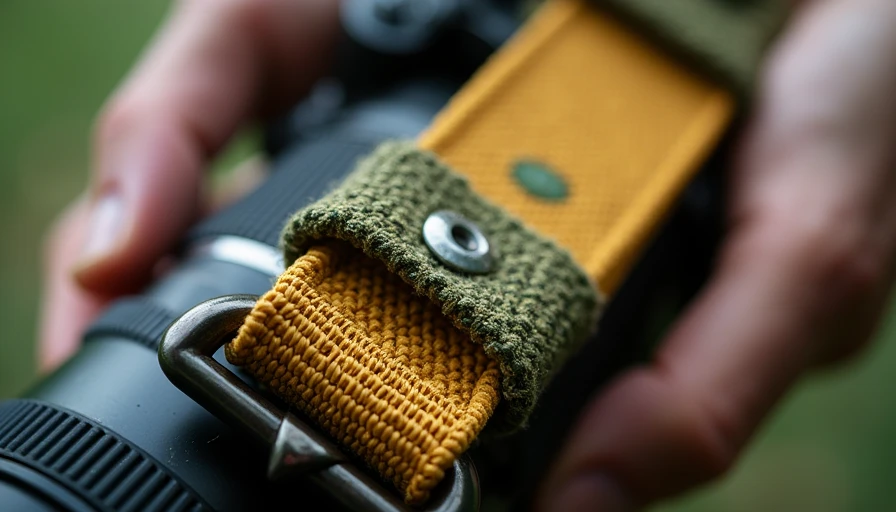
The peak design leash camera strap looks simple because it is solving a simple problem: keeping a camera close without making you feel wrapped in equipment. I have used it with compact mirrorless bodies, full-frame cameras, and a small prime lens while walking jobs in Los Angeles. The important question is not whether it has clever hardware. It does. The useful question is whether those details make your camera easier and safer to carry.
For most photographers, a strap is successful when it disappears during a shoot. It should not twist constantly, dig into your neck, or force you to remove it before placing the camera on a table. The Leash takes a lightweight, minimalist approach. It is narrow, adjustable, and designed to work as a neck strap, shoulder strap, or temporary tether. That flexibility is the reason I would consider it for travel and everyday photography rather than only for formal assignments.
What the Leash is designed to do
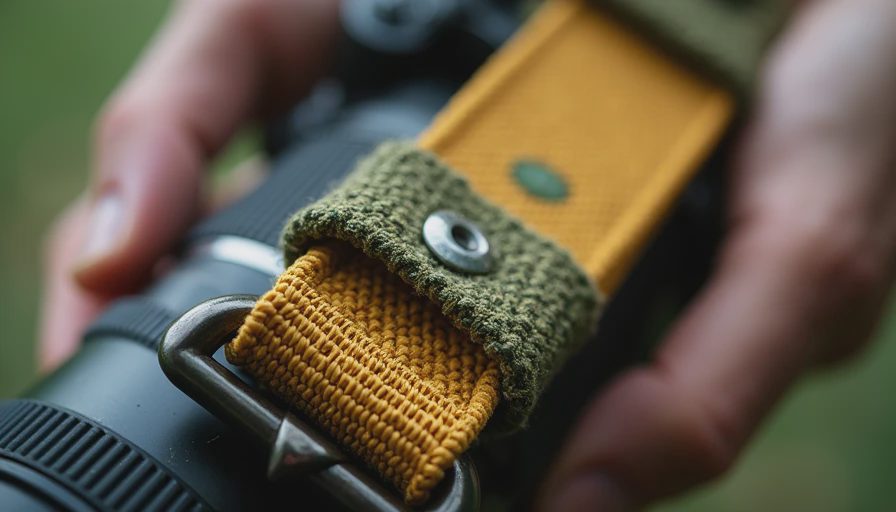
The Leash uses Peak Design’s Anchor Link system. Each anchor is a small, round connector attached to an adjustable webbing loop. The connector clicks into a strap head, and pressing the release button lets you remove it. In plain English, this means the camera can separate from the strap without unthreading anything or leaving a bulky buckle attached to the body.
That matters when switching between a strap, a tripod, and a camera bag. I often want the camera bare on a tripod, then secured around my shoulder a few minutes later. With the peak design leash camera strap, that change takes seconds. The anchors also provide a useful visual check: the colored indicator on each connector helps you see when one has worn enough to consider replacement.
The webbing is thin but not flimsy. It slides through the adjustment hardware smoothly, and the length range gives you several carrying positions. Worn short, the camera sits high against the chest. Worn longer, it hangs closer to the hip for quick access. Neither arrangement is universally best; the right position depends on your body, clothing, and whether you are walking or actively shooting.
Comfort, movement, and camera access
A narrow strap can sound less comfortable than a wide padded one, but width is only part of the equation. A wide strap spreads pressure, while a slim strap tends to move more easily and pack smaller. During a two-hour street walk, I found the Leash comfortable with a small mirrorless body and a 35mm lens. With a larger professional body and a heavy zoom, I became more aware of the strap’s narrow profile.
That is where the peak design leash camera strap makes the most sense: cameras that are substantial but still reasonably portable. It is not a padded harness, and it does not pretend to be one. If you carry a gripped DSLR with a 70-200mm lens all day, a wider sling or dedicated harness will distribute weight better. For a Sony a7 IV, Canon EOS R6 Mark II, Nikon Z6 II, Fujifilm X-T5, or comparable setup, the Leash offers a good balance of freedom and control.
The adjustment slider is easy to operate with one hand. Pulling the free end shortens the strap; lifting the slider and feeding the webbing back lengthens it. That is more useful than it sounds when moving from a crowded sidewalk to a quiet portrait setup. I can raise the camera quickly without taking the strap over my head, then lower it again when I need both hands.
Hardware and security details
The most reassuring part of the peak design leash camera strap is the connection system, not the fabric. The anchors are rated for far more than a typical camera weighs, but a rating is not a substitute for inspection. Before a paid shoot, I check that each connector is fully seated and that the webbing has not been cut by a sharp edge on the camera lug.
Peak Design’s anchor design also avoids the metal-on-metal scraping that some traditional strap rings can cause. That is helpful on painted or textured camera bodies. Still, I do not let the camera hang carelessly against a concrete wall or the side of a car. Any strap can fail if its attachment point is damaged, incorrectly fitted, or neglected.
One practical advantage is redundancy. You can connect the two anchors to the camera’s standard strap lugs, or use a compatible Peak Design plate when your setup calls for it. If you use a tripod plate, make sure the plate and screw are tight before trusting the camera to it. I treat that as a pre-shoot habit, just like formatting a memory card.
How it compares with other strap styles
A traditional nylon neck strap is usually included with a camera and costs nothing extra, but it often twists and advertises the camera brand. It can be perfectly serviceable for a beginner. A leather strap offers a softer, more deliberate feel and can look appropriate at events, though it is less convenient to adjust and may become uncomfortable in heat.
A sling strap generally provides faster access because the camera rides at the hip and slides upward along a fixed path. That is excellent for event coverage and travel, but the extra hardware can feel busy when you are carrying a bag. The peak design leash camera strap sits between those options. It is simpler than a sling, more adjustable than leather, and more polished than the strap that came in the box.
Price is another part of the decision. Peak Design products are rarely the cheapest choice, and the Leash can cost roughly $45 to $55 depending on the package and retailer. That is a meaningful amount for a strap. The value comes from reusing the Anchor Link system across compatible Peak Design straps and accessories, not from a dramatic improvement in image quality. Your photographs will not become sharper because of it.
Best uses and limitations
I would choose the peak design leash camera strap for travel, city walks, casual portraits, museum visits where permitted, and editorial work requiring frequent changes between carrying and shooting. Its low bulk is especially helpful when the camera is already sharing space with batteries, a notebook, and one spare lens.
I would be more cautious for very heavy combinations, long hikes with a large telephoto, or situations where the camera will swing aggressively. In those cases, use a wider strap or a dedicated harness, and consider supporting the lens with your hand. The Leash is also not a substitute for a camera bag. If you set the camera down, remove the strap from anything that can snag it.
Before buying, measure the combined weight of your body, lens, and accessories. Wear a scarf, jacket, or similar clothing if that is how you normally shoot. Then test whether the camera sits where your hand naturally reaches it. This small exercise tells you more than a product photograph does.
My buying recommendation
The peak design leash camera strap is a strong choice for photographers who want a compact, adjustable strap with quick-release connections and a clean design. It is particularly convincing if you already own another Peak Design product and will use the anchors across multiple cameras or carrying methods.
It is not the universal best strap. A padded sling can be better for heavy gear, while a basic nylon strap is adequate for occasional family photography. That is not a criticism; it is simply matching the tool to the load. For my everyday mirrorless kit, the Leash earns a place because it reduces friction without adding much bulk.
Inspect the anchors, tighten your tripod plate, and practice adjusting the length before the first important assignment. Spend the money on the strap only if those small conveniences solve a real annoyance in your routine. The best camera is the one you understand, and the best accessory is the one that helps you use it without thinking about it.