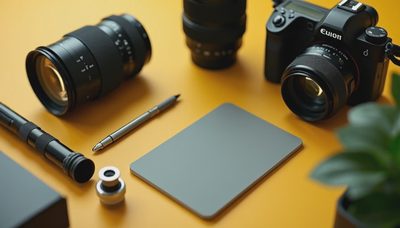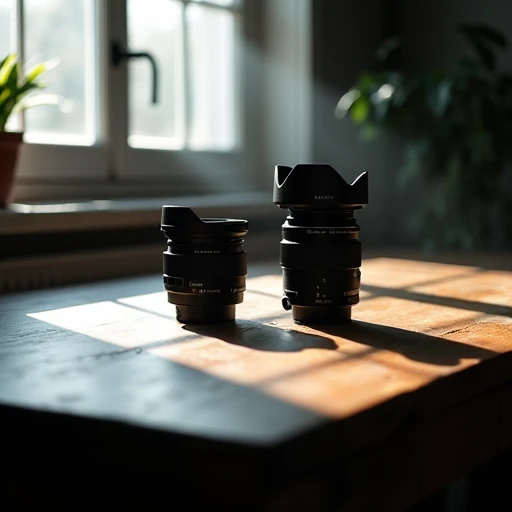
The usual advice is simple: primes are sharper and faster, zooms are more convenient. That version is not wrong, but it is incomplete. It skips the actual decisions you make when you put either type of lens on a camera and go to work.
I want to walk through the trade-offs as they show up in real use, not on a resolution chart.
What a prime actually gives you
A prime lens has one focal length. Because the optical design only has to solve for that single distance, the engineers can often deliver better performance at a given size and price. You typically get a wider maximum aperture, stronger control over depth of field, and, in many cases, higher resolution across the frame when both lenses are shot at the same aperture.
The other advantage is mental. With only one focal length you stop zooming with your hand and start moving with your feet. Over time that constraint trains you to see in a particular way. Many photographers find their compositions improve simply because the lens forces them to commit.
Those are real benefits. They are also not automatic. A mediocre prime is still a mediocre lens. And the wider aperture only helps if you actually use it and if the rest of the optical formula holds up when the lens is wide open.
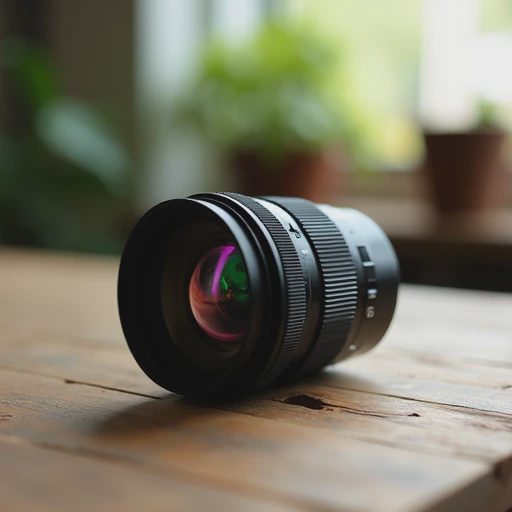
What a zoom actually gives you
A zoom covers a range of focal lengths. The obvious gain is flexibility: you can reframe without walking, respond faster when the subject or the light changes, and carry fewer lenses. On a working day that flexibility compounds. One less lens change means one less chance to miss a moment or to get dust on the sensor.
The optical cost is real. Designing a lens that performs well across a range of focal lengths is harder. At any given aperture and focal length, a zoom is often a little softer in the corners, a little more prone to distortion or chromatic aberration, and usually slower in maximum aperture than a comparable prime. Modern zooms have closed much of that gap, especially the better ones, but the gap has not disappeared.
Weight and size are the other trade-offs. A zoom that covers a useful range is frequently larger and heavier than the two or three primes it replaces. On a short walk that difference is minor. Over a ten-hour day it is not.
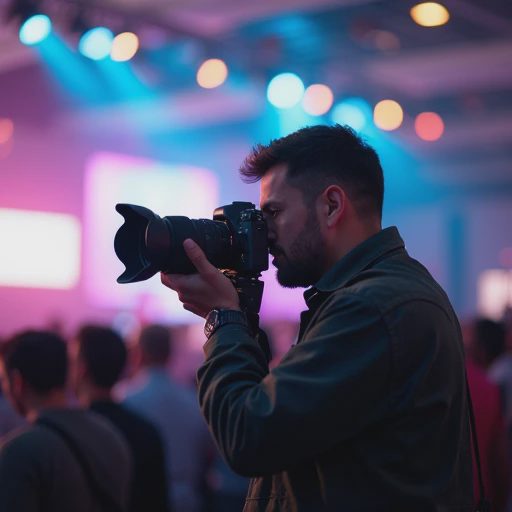
The trade-off that matters on a job
When I pack for a lookbook or an editorial, the question is rarely “which is optically superior.” The question is what the day actually requires.
If the work is controlled, the subject is not moving quickly, and I have time to choose my position, I often reach for primes. The rendering is cleaner, the viewfinder is brighter at wide apertures, and I like the discipline of a fixed focal length.
If the day is unpredictable—moving between locations, changing light, subjects who will not wait—I reach for a zoom. The ability to adjust framing in two seconds matters more than the last bit of edge sharpness. I have lost more frames to being in the wrong place with the wrong prime than I have lost to the minor optical compromises of a good zoom.
On wedding days the calculation tilts further toward the zoom. Moments do not pause while you switch lenses. The same is true for a lot of commercial work once the schedule gets tight.
A clearer way to decide
Instead of asking whether primes are “better,” ask these questions:
How often do I actually need to change focal length during a single scene?
Do I regularly shoot wide open, and does the prime I am considering perform well wide open?
How much weight am I willing to carry for the optical gain?
Is the zoom I am considering good enough at the focal lengths and apertures I use most?
If you mostly work at f/2.8 or smaller and value speed of framing, a solid zoom will serve you well. If you care about shallow depth of field, maximum resolution, and are willing to move your feet, primes still earn their place.
Many working photographers, myself included, use both. The decision is not permanent. It is specific to the work in front of you.
One practical note on “sharp enough”
Most modern primes and mid-to-high-end zooms are sharp enough for the majority of real-world use once you stop them down a little. The differences show up when you pixel-peep, print very large, or shoot wide open in demanding light. If your photographs are viewed on screens or as normal-sized prints, the practical gap is smaller than the internet conversation suggests.
The best lens is the one whose behavior you understand and whose limitations you have already accepted. Whether that lens is a prime or a zoom matters less than whether you know what it will do when the light gets difficult and the moment does not wait.