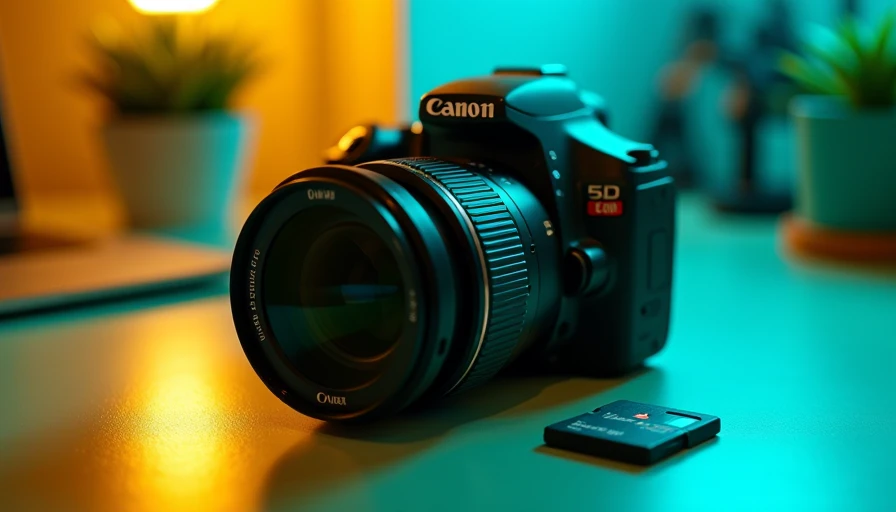
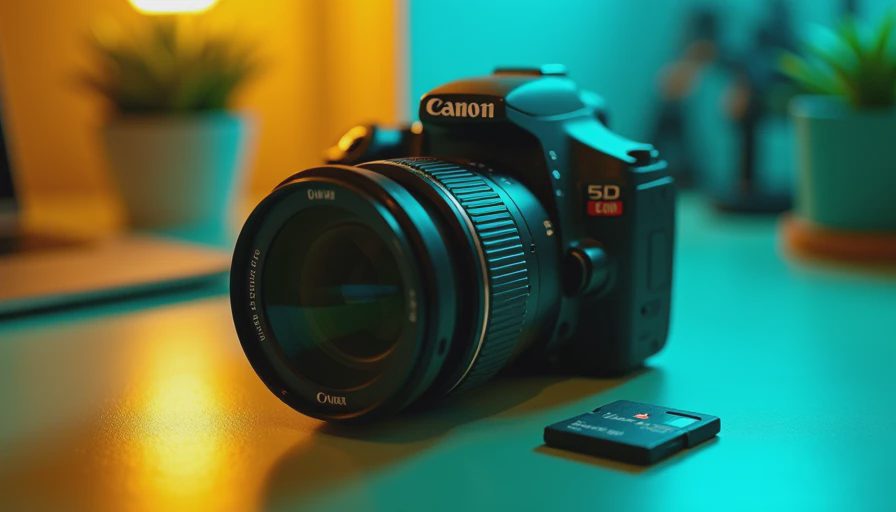
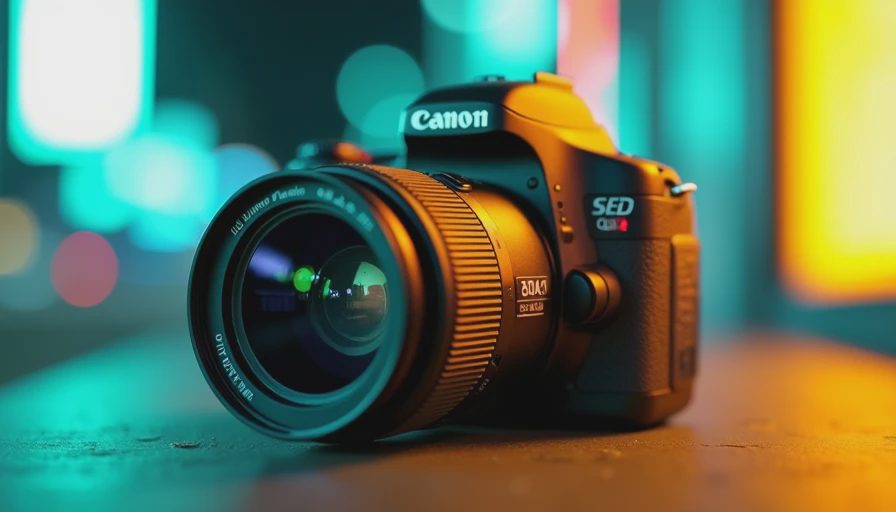
The t6 canon usually refers to the Canon EOS Rebel T6, also sold as the EOS 1300D in some markets. It is an older entry-level DSLR, but that does not make it useless. In fact, the t6 canon can still be a sensible first interchangeable-lens camera if you find one in good condition and understand what it was designed to do. It offers a large APS-C sensor, familiar physical controls, and access to Canon's enormous EF and EF-S lens system without demanding a modern-camera budget.
The important question is not whether this camera wins a specification contest. It does not. The better question is whether its limitations will interfere with the photographs you want to make. For portraits, landscapes, travel, family documentation, and learning exposure, the answer is often no.
What the t6 canon actually offers
The camera uses an approximately 18-megapixel APS-C sensor paired with Canon's DIGIC 4+ processor. In plain English, that gives you enough resolution for normal prints, online galleries, and moderate cropping. It also gives you more control over background blur than a typical phone, especially when paired with an affordable prime lens such as the EF 50mm f/1.8 STM.
The t6 canon has a nine-point autofocus system, with the center point generally being the most dependable in ordinary light. Continuous shooting is modest, and the rear screen is fixed rather than articulated or touch-sensitive. Video recording tops out at Full HD rather than 4K. Those details matter if you photograph fast sports, vlog yourself, or work from unusual angles, but they are not deal-breakers for a beginner learning still photography.
Its native ISO range is suitable for daylight and many indoor situations, although high-ISO images show more noise than files from newer cameras. Noise is the fine, grain-like texture that appears when the sensor is pushed in dim conditions. A tripod, a faster lens, or a small flash can often solve that problem more effectively than buying a new body.
Learning photography with the t6 canon
I often recommend starting with the exposure triangle rather than chasing the newest body. Aperture controls how much light enters and influences depth of field. Shutter speed controls motion blur. ISO adjusts the sensor's brightness response, with higher settings helping in darkness but usually adding noise. The t6 canon gives you direct access to all three through Manual, Aperture Priority, and Shutter Priority modes.
Begin with Aperture Priority, marked Av on Canon cameras. Choose an aperture such as f/2.8 for a single portrait or f/8 for a landscape, then watch the shutter speed the camera selects. If that speed falls below about 1/60 second for a handheld portrait, raise ISO or open the lens. This simple exercise teaches more than scrolling through reviews.
The optical viewfinder is another useful part of the experience. You see the scene through the lens without the delay or processing preview common with electronic displays. It also encourages you to hold the camera steadily against your face. The t6 canon is not glamorous, but its controls are straightforward enough that you can concentrate on timing, light, and composition.
Lens choices matter more than the body
Many used kits include the EF-S 18-55mm zoom. It is lightweight and covers useful everyday angles, from moderately wide scenes to short telephoto framing. It is a good lens for learning, though its maximum aperture is not especially bright. In practice, a clean 18-55mm lens will usually improve your results more than replacing a working t6 canon with another entry-level DSLR.
For portraits, the inexpensive EF 50mm f/1.8 STM is a popular addition. On the APS-C sensor, its field of view looks similar to a short telephoto lens, which can flatter faces and separate a subject from a simple background. For indoor rooms, however, 50mm can feel tight. The EF-S 24mm f/2.8 STM is easier to use in small spaces and makes a compact walk-around combination.
Remember that Canon's EF and EF-S lenses are not interchangeable in exactly the same way as every newer mirrorless lens. EF lenses work on the camera, while EF-S lenses are made for Canon's APS-C DSLR bodies. Avoid buying an RF lens for this camera; RF lenses belong to Canon's mirrorless system and are not the correct mount.
Where the t6 canon shows its age
The camera's autofocus is adequate for a stationary person, casual pets, and general travel, but it is not comparable to the subject-tracking systems in current mirrorless cameras. A runner moving toward you can expose that weakness quickly. Live-view focusing is also slower and less sophisticated than what you will find on a Canon EOS R50 or Sony a6400.
Battery life, wireless features, and screen design also reveal the camera's age. Built-in Wi-Fi and NFC can help transfer images, but the connection experience is not as seamless as modern phone-to-camera systems. The screen does not flip forward, and the body offers no built-in electronic viewfinder because it is a DSLR. If you need reliable eye-detect autofocus, silent shooting, or serious video tools, shop newer equipment instead.
That does not mean every limitation is visible in a finished photograph. A carefully focused landscape from the t6 canon can look excellent. A well-lit portrait can have pleasing color and detail. The camera struggles most when the subject moves quickly, the light is poor, or the photographer needs a rapid automated workflow.
Buying a used t6 canon responsibly
Used prices change with condition, accessories, and local demand, but this model is generally found in the budget portion of the DSLR market. Before paying, inspect the sensor and mirror area for obvious dust or damage, test every button, confirm that the flash pops up, and take several photographs at different apertures. Bring a memory card and examine files on a computer if possible.
Ask about the shutter count, though it is only one part of the camera's history. A low-count body stored in damp conditions is not automatically better than a higher-count camera that was kept clean and dry. Check the battery for swelling, make sure the charger is included, and look for corrosion around the battery and card compartments.
A reasonable starter kit might include the body, battery, charger, 18-55mm lens, and a basic strap. Avoid paying extra for a large bundle of cheap filters or an oversized tripod. Put that money toward a spare battery, a reliable SD card, or a lens that fits your actual subjects.
Should you still choose the t6 canon?
Choose the t6 canon when your priority is learning still photography inexpensively, using Canon DSLR lenses, and working mostly with patient subjects. It is especially appealing if a friend or family member already has compatible EF lenses. The camera's age becomes much less important when the light is good and your subject is not moving quickly.
Look elsewhere if you need dependable action autofocus, polished video, a flip-out screen, or fast wireless sharing. A newer used Canon Rebel T7, Canon EOS 90D, Canon EOS M50, or mirrorless EOS R-series model could be a better fit depending on your budget and lens plans. Do not buy any of them solely because a review says your current camera is obsolete.
The t6 canon remains a useful teaching tool, not a trophy. Learn to read light, focus deliberately, and edit with restraint before spending more. The best camera is the one you understand, and this modest DSLR can teach you plenty when you use it with intention.