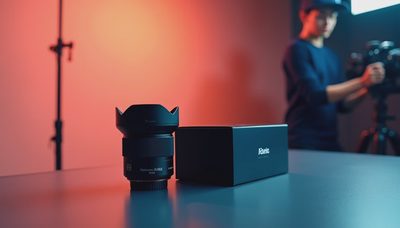
A long telephoto lens can look intimidating on a specification sheet, especially when the numbers include a crop factor, optical stabilization, and a relatively modest aperture. The panasonic lumix g vario 100-300mm f/4-5.6 ii power o.i.s lens is easier to understand in the field: it is a compact Micro Four Thirds zoom designed to bring distant subjects close without asking you to carry a professional-sized barrel. I have used lenses in this class for birds, outdoor sports, travel details, and moonlit landscapes, and the important question is not whether it is impressive on paper. It is whether you will actually want to take it with you.
What the focal length means in real photographs
The lens covers 100mm to 300mm, but Micro Four Thirds sensors give that range a 2x field-of-view equivalent. In practical terms, you get an angle of view similar to a 200-600mm lens on a full-frame camera. That is the central reason to consider the panasonic lumix g vario 100-300mm f/4-5.6 ii power o.i.s lens for wildlife and distant action. A bird sitting 60 feet away occupies noticeably more of the frame than it would with a standard 200mm lens.
At 100mm, the lens is useful for larger animals, outdoor portraits, and field sports where you cannot stand near the action. At 300mm, small birds become realistic subjects rather than tiny dots. The tradeoff is framing: at the long end, a moving subject can leave the viewfinder quickly. I usually begin at 100mm, locate the subject, and then zoom in. That simple habit saves more shots than immediately blaming autofocus.
The 2x crop factor does not magically create extra detail. It changes the captured field of view, while sharpness still depends on focus, shutter speed, atmospheric conditions, and the camera body. Heat shimmer across a soccer field can soften a photograph even when the lens is perfectly focused.

Aperture, light, and the reason shutter speed matters
The maximum aperture is f/4 at 100mm and f/5.6 at 300mm. Aperture describes the opening that lets light reach the sensor; a smaller f-number means a larger opening. Compared with a premium 300mm f/2.8 lens, this zoom gathers less light and produces less background blur. It is also dramatically less expensive and easier to pack, which is a meaningful exchange for many photographers.
In bright daylight, the panasonic lumix g vario 100-300mm f/4-5.6 ii power o.i.s lens has enough reach for birds, baseball, hiking, and travel. Under heavy shade or near sunset, you may need to raise ISO or accept a slower shutter speed. For a perched bird, 1/500 second can be a reasonable starting point. For a bird in flight or a fast runner, 1/1000 second or faster is often more comfortable. Those are starting points, not guarantees.
Optical image stabilization helps reduce camera shake from your hands, especially when the subject is stationary. It does not freeze a moving bird or athlete. That distinction matters: stabilization can make a static tree sharper at 300mm, but it cannot correct subject motion during a 1/125-second exposure. If your camera body and lens both offer stabilization, read the body manual to confirm how their systems cooperate.
Autofocus and handling in the field
The second-generation design is intended to be more practical for everyday shooting, with a weather-resistant construction and a focus system suited to compatible Micro Four Thirds bodies. Weather resistance is not the same as waterproofing. I would be comfortable continuing through light drizzle with a protected camera, but I would not leave the kit exposed to blowing rain or salt spray.
The panasonic lumix g vario 100-300mm f/4-5.6 ii power o.i.s lens is relatively manageable beside full-frame 600mm options. That makes it a sensible choice for a long walk, a day at an air show, or a wildlife trip where every ounce counts. The zoom ring has a long range, so you need deliberate movement rather than a quick twist. A monopod can help during extended sessions, although I often prefer handheld shooting when tracking unpredictable animals.
Autofocus performance depends heavily on the camera body, focus mode, and subject contrast. For a stationary animal, single-point autofocus gives you useful control. For erratic movement, a continuous mode with a wider subject area can be easier. No lens can rescue an autofocus setup that is searching across the entire frame while a bird occupies only a few pixels.
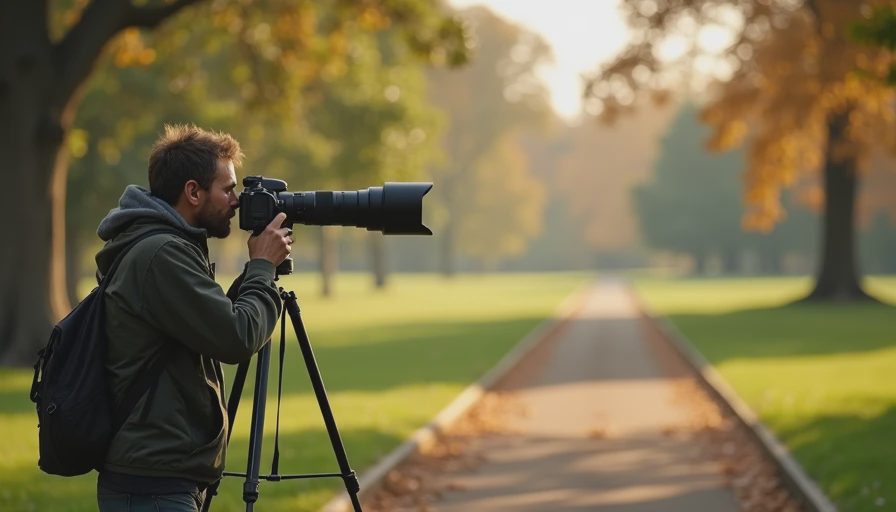
Image quality: what to expect from the zoom
The panasonic lumix g vario 100-300mm f/4-5.6 ii power o.i.s lens can produce crisp central detail when focus and shutter speed are right. The long end is the most demanding: small focusing errors, atmospheric haze, and camera movement all become obvious at 300mm. Stopping down slightly can help in favorable light, but do not sacrifice the shutter speed needed for the subject.
Contrast is generally useful for outdoor work, and the lens offers the kind of reach that often matters more than laboratory perfection. A sharp photograph of a hawk framed cleanly is more valuable than a technically superior photograph in which the hawk is a speck. At close focusing distances, you can also isolate flowers, details on buildings, and compressed landscape layers, though this is not a dedicated macro lens.
When reviewing files, compare photographs taken at the same shutter speed and focus distance. A soft image does not automatically indicate a poor lens. At 600mm equivalent, even a small movement can turn fine feather detail into a blur. Use a fast shutter, brace your elbows, and take short bursts when the subject gives you a good pose.
Who should buy it, and who should look elsewhere
The panasonic lumix g vario 100-300mm f/4-5.6 ii power o.i.s lens makes sense for a Micro Four Thirds owner who wants serious reach without the cost, size, or weight of a professional telephoto. It is especially attractive for daylight wildlife, travel, casual sports, and backyard bird photography. Used prices often make this category even more approachable, while new pricing typically sits well below premium professional zooms.
It is less convincing for indoor sports, dim wedding receptions, or wildlife at dusk. In those situations, a faster lens such as Panasonic's Leica DG Vario-Elmarit 50-200mm f/2.8-4.0 gives you more light, though with less maximum reach and usually a higher price. A 100-400mm option offers additional reach but is larger and more expensive. The right choice depends on whether your priority is portability, low-light performance, or distance.
Before buying, check your camera body's compatibility with lens stabilization and autofocus features. Also consider your support habits. A lightweight body paired with a long lens can feel front-heavy, even when the total kit is not heavy on a scale.
A simple setup for your first outing
Start in aperture priority or manual mode with auto ISO. Set the shutter speed high enough for the subject, then let the camera adjust sensitivity within a limit you are comfortable with. Select continuous autofocus for moving subjects and use electronic or mechanical burst shooting according to your camera's behavior. Photograph a stationary object first so you can confirm stabilization, focus, and handling before chasing wildlife.
If you are photographing birds, keep the focus point on the head or nearest eye when your camera can recognize it. If the subject is too small for reliable detection, use a single point and accept a few misses. Review images at 100 percent, but also review them at the size you normally share or print. Pixel-level inspection can make a perfectly useful field photograph seem worse than it is.
The panasonic lumix g vario 100-300mm f/4-5.6 ii power o.i.s lens is not a replacement for a fast professional telephoto. It is something more practical: a portable way into long-lens photography. Learn its light limits, use enough shutter speed, and give yourself time to practice finding subjects. The best camera is the one you understand, and the same is true of the lens attached to it.