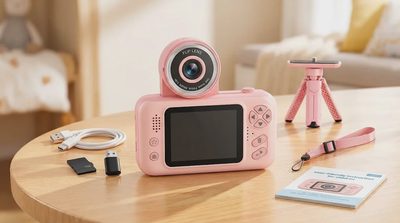
The sony camera dsc t700 is the sort of camera that can look underwhelming beside a modern interchangeable-lens body, yet still make sense for a particular kind of photographer. It is small, simple, and designed to disappear into a jacket pocket. I spent years evaluating imaging hardware, and my first question with an older compact is not whether it can compete with a current Sony Alpha. It cannot. The better question is whether its limitations fit the pictures you actually want to make.
What the DSC-T700 is
Sony introduced the Cyber-shot DSC-T700 in 2008. Its headline feature was a 10.1-megapixel sensor paired with a folded 4x optical zoom lens. Instead of extending out from the front, the lens sits inside the slim body and uses a prism arrangement to keep the camera pocket-friendly. That design is why the T700 feels more like a small media player than a traditional camera.
The lens covers an approximately 35–140mm equivalent range. At 35mm, you can photograph a person at a cafe table, a street scene, or a small group without stepping too far back. At 140mm, you can frame a distant detail or make a face fill more of the image. It is not especially wide by today’s standards, so cramped interiors and sweeping landscapes are not its strongest subjects.
A 3.5-inch touchscreen dominates the rear panel. For 2008, its roughly 921,000-dot resolution was impressive, and it remains useful for reviewing focus and navigating menus. The interface is more direct than a button-heavy enthusiast camera, although touch controls can feel slow compared with a modern smartphone. The camera also includes a sliding front cover, which protects the lens and serves as the power switch.
The sony camera dsc t700 records still images as JPEG files and offers familiar exposure modes rather than the extensive control found in a current mirrorless camera. Its ISO range reaches from low sensitivity settings through ISO 3200, but the higher settings are best regarded as emergency options. More sensitivity allows faster shutter speeds in dim light, but the small sensor produces visible noise and smearing as the ISO rises.

How the image quality looks today
In good daylight, the sony camera dsc t700 can produce attractive photographs with pleasant color and enough detail for social sharing, small prints, and family albums. The lens is most convincing near its middle focal lengths. At the wide end, corners can look softer, particularly when you inspect files at full size. That is normal for a slim compact from this period, not evidence that every copy is defective.
The sensor is the main constraint. It is much smaller than the APS-C sensor in a Sony a6400 or the full-frame sensor in a Sony a7 III. A larger sensor generally gathers more light and gives you cleaner shadows, better highlight tolerance, and more control over background blur. The T700 gives you very little natural separation between a subject and its surroundings. You can still create a strong image, but composition, light, and timing matter more than shallow depth of field.
Its built-in optical image stabilization is helpful when you are holding the camera still for a stationary subject. Stabilization reduces the effect of your hand movement; it does not freeze a moving child, cyclist, or dog. In those situations, you need a faster shutter speed, which often means accepting more noise. This distinction is easy to miss when reading a specification sheet.
Video is another area where age shows. The T700 is a standard-definition video camera rather than a 4K device, and its movie files are suitable for casual clips but not modern production work. If you are buying it specifically for video, an inexpensive recent smartphone will usually be the more practical tool.
Everyday handling and battery concerns
The sony camera dsc t700 is enjoyable when convenience matters more than control. It weighs very little, starts quickly enough for casual use, and requires no lens changes. The front cover protects the optics in a bag, while the touchscreen makes playback approachable for someone who does not want to learn aperture, shutter speed, and autofocus menus.
That simplicity comes with compromises. There is no viewfinder, so bright sunlight can make the rear screen difficult to see. The touchscreen also encourages tapping at the subject and trusting the camera’s automatic decisions. For a carefully timed image, I prefer a physical shutter button and a more predictable focus system, but those are not the reasons to buy this model.
Battery condition deserves particular attention. The original NP-BD1 battery is old by now, and a used listing that includes a battery does not guarantee useful shooting time. Replacement batteries are available from third-party sellers, but quality varies. Budget for a new battery and a compatible charger rather than assuming the included one will hold a full charge. A memory card is also sensible, even though some versions of the camera included substantial internal storage.
Who should consider it
The sony camera dsc t700 makes sense as a low-cost pocket camera for daylight travel, a first dedicated camera, or a tactile alternative to photographing everything with a phone. It can be a fun choice for someone who likes the look and experience of older digital cameras. The restrained files can also encourage you to think about framing instead of endlessly changing settings.
It is less suitable for indoor events, sports, wildlife, serious night photography, or paid client work. Autofocus and shutter response belong to an earlier generation, and the small sensor leaves little room for aggressive editing. If you need reliable results at a wedding reception, a current entry-level mirrorless body will save frustration. If you want clean video, a recent phone or compact camera is the stronger purchase.
A realistic used price depends on condition, accessories, and seller, but the camera should be treated as a modest vintage compact rather than a hidden professional bargain. Avoid paying a premium simply because a listing uses words such as rare or collectible. Test the touchscreen, lens movement, flash, zoom rocker, battery door, and card slot before committing. Dust behind the lens is difficult to correct after purchase.
What to check before buying
When inspecting the sony camera dsc t700, begin with the lens cover. It should slide smoothly and the lens should extend without grinding, hesitation, or a repeated error message. Take several photographs at both ends of the zoom range. Look for a dark corner, unusual lines, or persistent spots that remain in the same place across every frame.
Next, test the touchscreen across its edges and center. Open playback, zoom into a photograph, and confirm that taps register where you expect. Check the flash in a dim room, then record a short movie and play it back with sound. Old compact cameras can have tired batteries, sticky controls, cracked screens, or failing internal storage, and cosmetic photos may not reveal those problems.
Ask whether the seller includes the proprietary cable, charger, battery, wrist strap, and a memory card. Missing accessories are not automatically deal breakers, but replacements add to the real cost. A clean camera with a tested battery is worth more than a cheaper body that needs three separate parts before it can make one photograph.
My practical verdict
The sony camera dsc t700 is not a sensible replacement for a modern mirrorless camera, and it does not need to be. Its appeal is compactness, touch operation, daylight color, and the pleasure of using a device from a transitional moment in digital photography. Buy it for those qualities, not for pixel-level performance or professional speed.
If you want an inexpensive camera to carry on walks, document trips, or give a beginner a dedicated tool, a working T700 can be charming. Just confirm the battery and lens before purchase, keep expectations grounded, and use good light whenever possible. The best camera is the one you understand; with this one, understanding the boundaries is what makes it enjoyable.