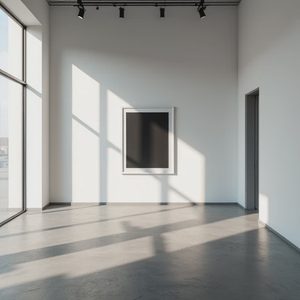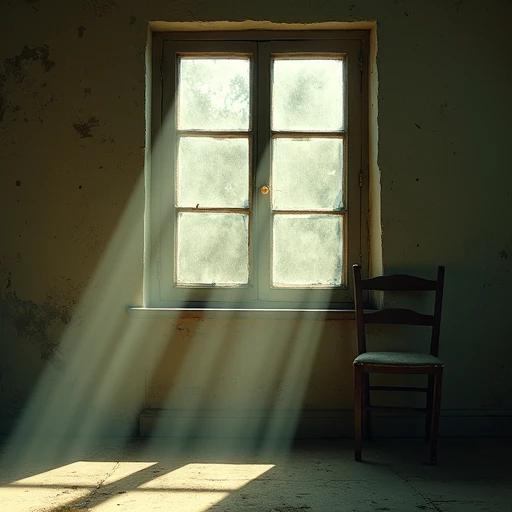
Last winter I spent an afternoon at an Annie Leibovitz exhibition in Los Angeles. I went expecting to look at famous faces and carefully controlled lighting setups. What stayed with me instead was a single window.
One of the rooms held a series of quieter portraits—less theatrical than the ones that usually circulate online. In several of them the primary light came from a window just outside the frame. Soft, directional, slightly cool. The kind of light most of us walk past every day without noticing.
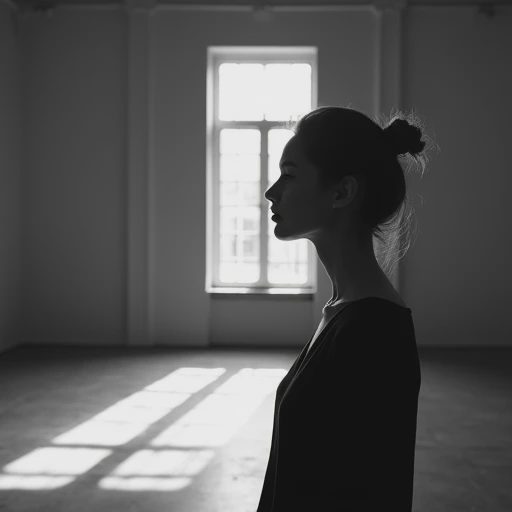
I stood in front of those pictures longer than the more dramatic ones. Not because the subjects were more interesting, but because the light felt familiar and, at the same time, more carefully considered than I usually manage on a job.
What the window was actually doing
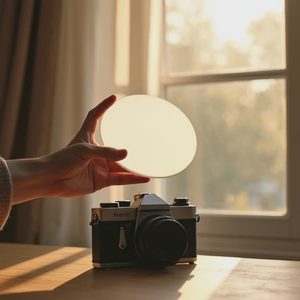
The light was not even. It fell off across the subject’s face in a gentle gradient. One side of the face held open shadow; the other side carried a soft highlight that never quite turned specular. The window was large enough to wrap, but not so large that it erased shape. Leibovitz (or her team) had placed the subject far enough from the glass that the light had already softened, yet close enough that direction remained clear.
None of this required a softbox or a diffusion frame. It required attention to where the subject stood relative to an existing source, and the patience to let that source do the work.
I have measured window light in controlled tests. I know the approximate quality of north-facing light versus late-afternoon side light. Knowing the numbers is useful. Standing in front of these pictures reminded me that the numbers are only the starting point. The real decision is how deliberately you use what is already there.
A small shift in how I look now
Since that afternoon I have started treating ordinary windows with more respect on set. When I walk into a location for a lookbook or an editorial, the first thing I do is note the windows the same way I used to note the position of a key light in a studio. Size, direction, height, and how the light changes across the floor.
Sometimes the best decision is to turn off every light I brought and simply move the subject three feet closer to the glass. Sometimes the window is the wrong color or the wrong intensity and I still reach for a fixture. The difference is that I now check the window first instead of defaulting to the gear I carried in.
This is not a romantic idea about “natural light only.” It is a practical observation: the most controllable light is often the one that is already present, provided you understand what it is doing.
Gear stays in its place
I did not leave the exhibition wanting a new lens or a different camera body. I left wanting to be more careful about placement and more willing to wait for the light to do something interesting. Those two things cost nothing and improve more photographs than most equipment upgrades.
The cameras and lenses I use still matter. They record what I point them at. But the exhibition made the hierarchy clear again: seeing comes first. Understanding the light in a room comes second. The tool you use to record it comes third.
If you have the chance to stand in front of work that was made with obvious care, stay longer than feels necessary. Look past the famous subject or the dramatic pose. Find the window, or the practical lamp, or the open doorway that is actually shaping the picture. Then ask yourself how often you give that same level of attention to the light already available on your own jobs.
The best camera remains the one you understand. Understanding begins with noticing what the light is already offering before you reach for anything else.