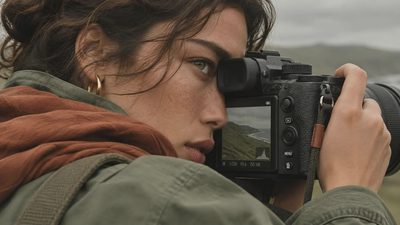
Choosing a camera for news is less about owning the newest sensor and more about getting a usable frame, clean audio, and a reliable file before the moment disappears. I learned that distinction while testing imaging systems on benches and later carrying them through real assignments. A camera that looks spectacular in a studio can be awkward on a crowded sidewalk, slow to transfer, or too fragile for a long day.
News photography is demanding in a very specific way. You often work with changing light, little time to compose, unpredictable subjects, and editors who need files quickly. The right tool should be quick to wake, dependable in bad weather, comfortable with a 70-200mm lens, and simple enough to operate without staring at a menu. The best camera is the one you understand.
The core specifications that earn their place
Autofocus comes first. Look for a camera with dependable subject detection, but pay more attention to how it behaves when a subject turns away, crosses behind a fence, or moves through a group. Sony's a7 IV, Canon's EOS R6 Mark II, and Nikon's Z6 III are all strong examples of full-frame mirrorless bodies with responsive autofocus and useful low-light performance. None will rescue a poor technique, but each can reduce the number of missed frames.
A fast mechanical shutter still matters. Electronic shutters are quiet, which helps in courtrooms, ceremonies, and interviews, but fast movement can bend vertical lines through rolling shutter. That effect is caused by the sensor reading the image in sequence instead of all at once. For a camera for news, a mechanical shutter or a fast sensor readout is more valuable than a headline-grabbing burst rate you rarely sustain.
Resolution should be practical. Twenty-four megapixels is enough for most web publication and moderate print crops. Thirty-three or forty-five megapixels give you more room to reframe, but they create larger files and demand faster cards and storage. I would rather have a clean 24-megapixel frame delivered on time than a huge file still sitting on a camera at deadline.

Body design for a long reporting day
A professional camera for news should feel predictable in your hands. A deep grip, two control dials, a well-placed exposure compensation control, and a bright electronic viewfinder reduce fumbling when the light changes. Weather resistance is useful, but it is not permission to leave any camera uncovered in a downpour. A compact rain sleeve and a microfiber cloth remain cheaper than a repair.
Battery life is another quiet advantage. Mirrorless cameras use power for their electronic viewfinders and displays, so carrying two or three spare batteries is sensible. USB-C charging can keep a body alive from a vehicle adapter or portable power bank, provided the specific model supports charging while in use. Dual card slots are especially helpful: you can record a backup simultaneously, or separate stills and video for a cleaner handoff.
Do not ignore the menu system. Canon, Nikon, Sony, Fujifilm, and Panasonic all organize controls differently. Rent a body before buying it, then practice changing ISO, shutter speed, focus mode, and white balance without looking down. On assignment, those four adjustments matter more than a small difference in dynamic range.
Lenses that cover real news situations
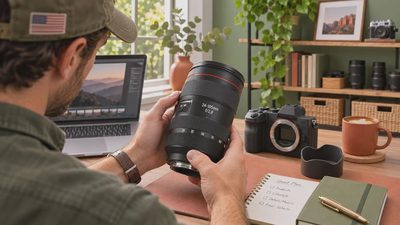
A camera for news is only as useful as the glass attached to it. For general reporting, a 24-70mm f/2.8 is the classic starting point. It covers environmental portraits, small rooms, street scenes, and quick details without forcing you to change lenses in dust or rain. The professional versions from Canon RF, Nikon Z, and Sony FE are expensive, commonly landing around $2,000 to $2,600, but they are built for frequent use.
A 70-200mm f/2.8 adds reach for protests, sports sidelines, press conferences, and moments where stepping closer would change the scene. It is heavy, so an f/4 version can be a better everyday choice. You lose a stop of light, but the lighter package is easier to carry for eight hours. A 35mm f/1.8 or 50mm f/1.8 is also worth packing. These smaller primes are bright, discreet, and often cost between $200 and $900 depending on the mount and construction.
If your budget is tight, start with a full-frame body and a 24-105mm f/4 zoom. It will not blur a background as dramatically as an f/2.8 lens, but it covers more situations and costs less than buying two professional zooms at once.

Stills, video, and sound under deadline
Many newsrooms now expect short video clips as well as photographs. If that is part of your work, check for 4K recording, a headphone jack, microphone input, reliable autofocus during video, and a recording limit that fits your assignments. A camera for news does not need cinema features you will never use, but it does need clean handling and stable exposure.
Audio deserves more attention than resolution. The built-in microphone is acceptable for a quick ambient clip, not a formal interview. A compact on-camera microphone from Rode or Deity can improve speech, while a small wireless system can help when the subject must stand several feet away. Monitor levels with headphones when possible. A beautifully framed interview with clipped audio is still a failed interview.
For stills, shoot RAW plus JPEG if your workflow requires immediate previews or captions. JPEG files transfer faster, while RAW gives you recovery latitude when a white shirt is close to clipping or a shadow loses detail. Set a consistent naming and folder system before leaving home. For example, use the assignment date, location, and camera body rather than relying on a crowded default folder.
Three sensible buying paths
For a first interchangeable-lens camera for news, the Canon EOS R6 Mark II is an approachable choice because its controls and autofocus are easy to learn, and its 24-megapixel files are manageable. The Sony a7 IV is appealing when you want high resolution, strong battery life, and access to a broad selection of native and third-party lenses. Nikon's Z6 III is worth considering if you value a responsive viewfinder and a modern sensor design for mixed stills and video work.
A used previous-generation body can be the smartest purchase. A Sony a7 III, Canon EOS R6, or Nikon Z6 II can produce professional results when paired with a good lens and practiced technique. Put the savings toward spare batteries, fast memory cards, a rain cover, and insurance for the equipment. Those accessories improve your odds of finishing an assignment more than a minor upgrade in autofocus specifications.
Before buying any camera for news, rent the body and your likely lens for a weekend. Photograph a moving subject, a dim interior, a backlit person, and a fast-changing public scene. Transfer the files to your computer, edit a small gallery, and test the controls while wearing a bag. This reveals balance, battery drain, menu friction, and file size in a way that a spec sheet cannot.
A dependable assignment checklist
Charge every battery and format cards in the camera. Confirm the date, time zone, copyright information, and image quality settings. Pack one wide or normal zoom, one telephoto if the assignment calls for distance, and a small prime only if it earns its space. Bring a card reader, power bank, rain cover, lens cloth, and backup storage.
When you arrive, take a few test frames and inspect the histogram rather than trusting the rear screen. The histogram is a graph showing how tones are distributed from dark to light; it helps you spot clipped highlights in harsh sun. Keep shutter speed high enough for the subject, use Auto ISO when conditions change quickly, and check focus at intervals instead of assuming every frame is sharp.
The ideal camera for news is not necessarily the most expensive one on the shelf. It is the body that starts quickly, focuses consistently, survives your routine, and produces files you can send without drama. Learn those controls until they feel boring. That familiarity is what leaves your attention available for the story, which is where the photograph actually begins.