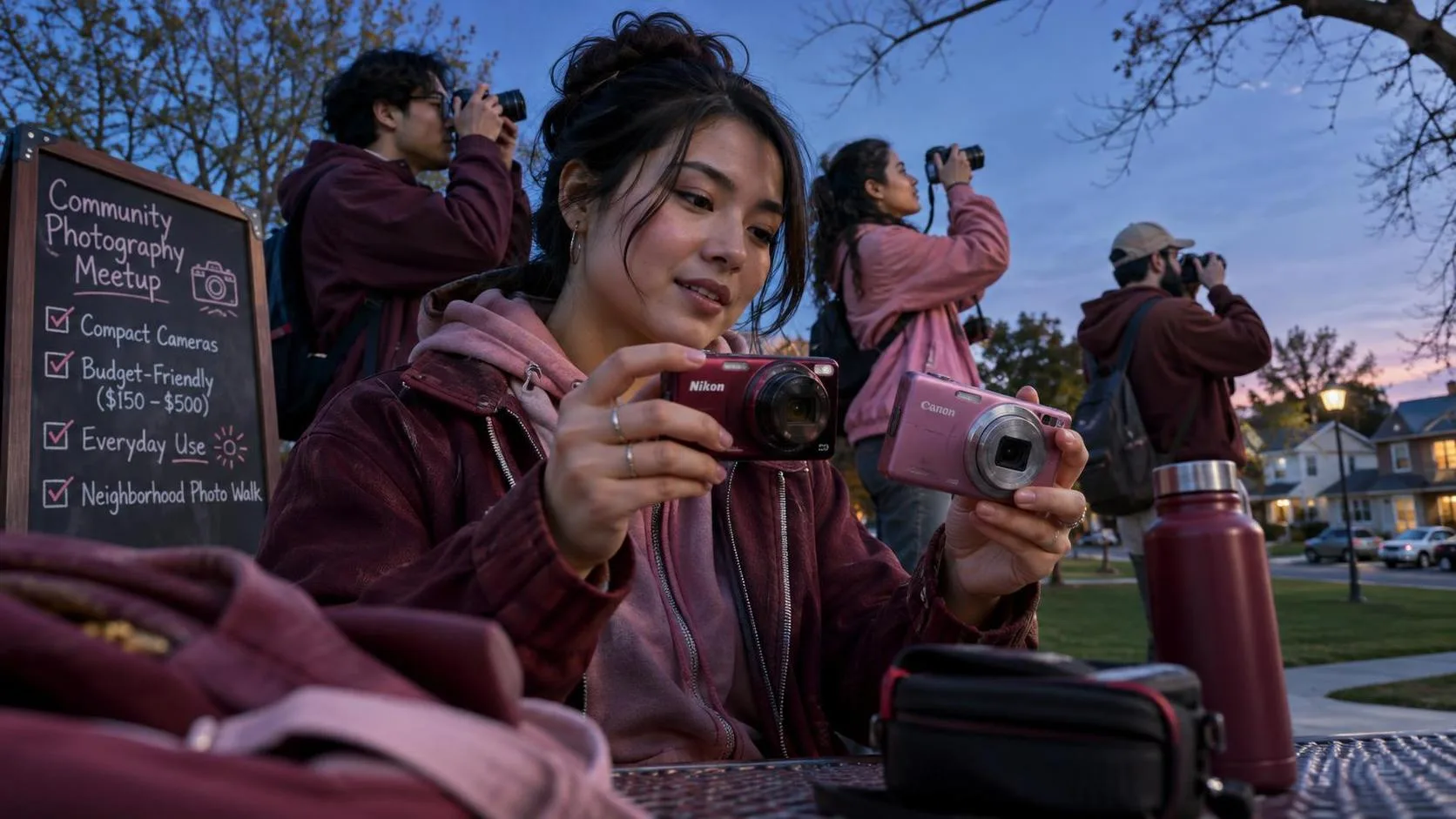
Searching for a good digital camera affordable enough for your budget can feel like trying to decode an engineering exam. Every product page leads with megapixels, burst rates, and video formats, while the feature that matters most is often much simpler: can you use the camera comfortably and get the result you want? I have tested sensors and autofocus systems on benches, then carried cameras through commercial shoots and ordinary weekends. The pattern is consistent. A thoughtful $600 camera can teach you more than a $2,500 body you find intimidating.
Start with the photographs you actually want
Before comparing models, name the situations you expect to photograph. A camera for family gatherings needs dependable autofocus and a useful zoom. A travel camera should be light enough to carry all day. Portrait work benefits from a bright lens and pleasing background blur, while landscapes reward a sharp wide-angle lens and good handling on a tripod.
This is why I would not begin with megapixels. Twenty-four megapixels is enough for large prints and generous cropping in most everyday work. A larger sensor, such as APS-C, generally gives you cleaner files in dim rooms and more control over depth of field than a phone or small compact camera. Micro Four Thirds bodies can be smaller and still produce excellent results, particularly in daylight.
A good digital camera affordable for a beginner should also have physical controls you can understand. A mode dial, exposure compensation control, and a clear rear screen are more valuable than a specification you will never use. If you can quickly change shutter speed or brightness, you will learn why your photographs look the way they do.
The best affordable camera types
Interchangeable-lens mirrorless cameras are usually the strongest place to start. The Canon EOS R50 is a particularly approachable example. Its autofocus is friendly for people and moving subjects, the body is compact, and the RF-S lens system gives you room to grow. Kit pricing often sits around the mid-hundreds rather than professional-camera territory, although sales and regional pricing change.
The Sony a6100 remains worth considering when you find a good used example. Its autofocus is capable, the 24-megapixel APS-C sensor is versatile, and Sony has a broad selection of lenses. The menus are less immediately pleasant than Canon's, but a patient setup session solves much of that. Sony's ZV-E10 is another option for someone who wants a flip-out screen and strong video features without an electronic viewfinder.
Nikon's Z50 is comfortable in the hand and produces attractive files, especially when paired with a modest prime lens. Used Fujifilm X-T30 II bodies can be appealing if you enjoy direct dials and a more tactile shooting experience. For the smallest kit, look at Micro Four Thirds cameras such as the Olympus OM-D E-M10 Mark IV or Panasonic Lumix G100. Their smaller sensors are not a failure; they are part of the tradeoff that keeps lenses compact.
Where the real budget goes
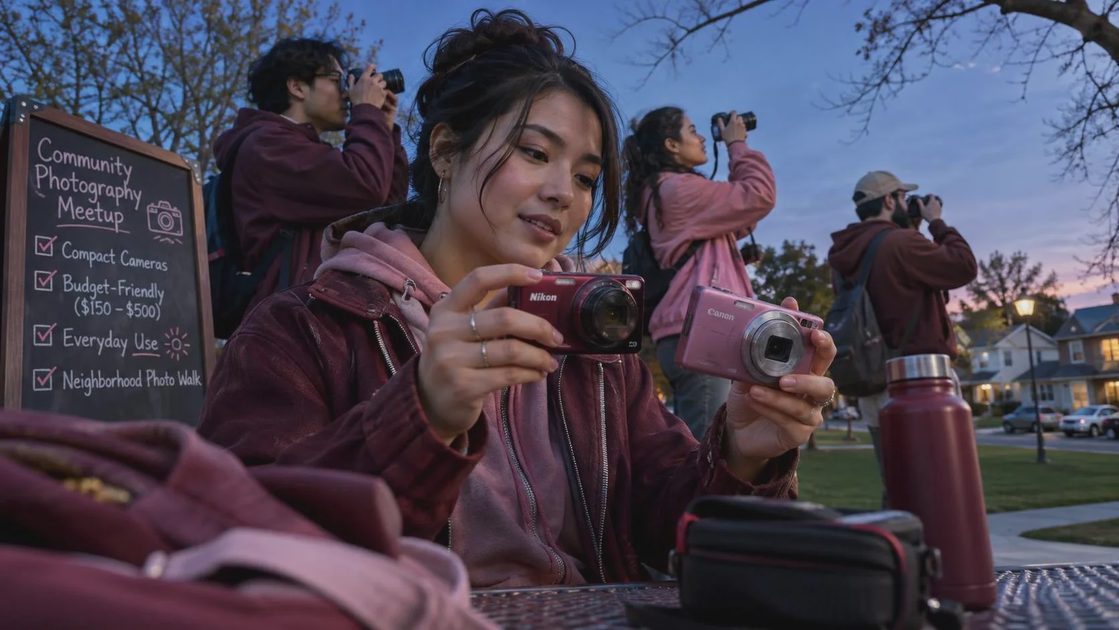
The camera body is only the beginning. Leave roughly $100 to $300 for a useful lens, battery, memory card, and a small bag. A 50mm-equivalent prime lens, such as a 25mm lens on Micro Four Thirds or a 35mm lens on APS-C, can teach composition while offering more background separation than a basic phone.
Do not automatically reject a kit zoom. The 16-50mm or 18-45mm lens bundled with many mirrorless bodies is light, quiet, and flexible. It is excellent for travel, interiors, children, and learning focal lengths. A faster prime becomes worthwhile later, when you know whether you prefer portraits, street scenes, food, or landscapes.
Used equipment can make a good digital camera affordable without forcing you into an obsolete system. Buy from a retailer with a return window when possible. Inspect the sensor for marks, check that the card slot works, test every dial, and examine the lens mount for damage. Shutter-count information is useful, but it is not a complete health report. A carefully used camera with a clean sensor can be a better purchase than a heavily discounted body with a problem.
Specs that matter more than marketing
Autofocus deserves attention, but do not confuse tracking modes with guaranteed sharpness. Eye detection helps when the subject is visible and reasonably separated from the background. It does not replace choosing an appropriate shutter speed. For a walking person, around 1/250 second is a sensible starting point; for a running child, you may need 1/500 second or faster.
Image stabilization is valuable for still subjects in dim light because it lets you handhold at slower shutter speeds. It cannot freeze a moving person. A wide aperture, represented by a smaller f-number such as f/1.8, gathers more light and creates a softer background. These concepts will improve your results more than a jump from 24 to thirty-three megapixels, especially if your final images are viewed on a phone or printed at ordinary sizes.
For video, check whether the screen flips forward, whether the microphone connection fits your workflow, and whether the camera overheats during your intended recording length. A camera that records impressive formats but feels awkward on a tripod is not automatically the right camera.
Three sensible buying paths
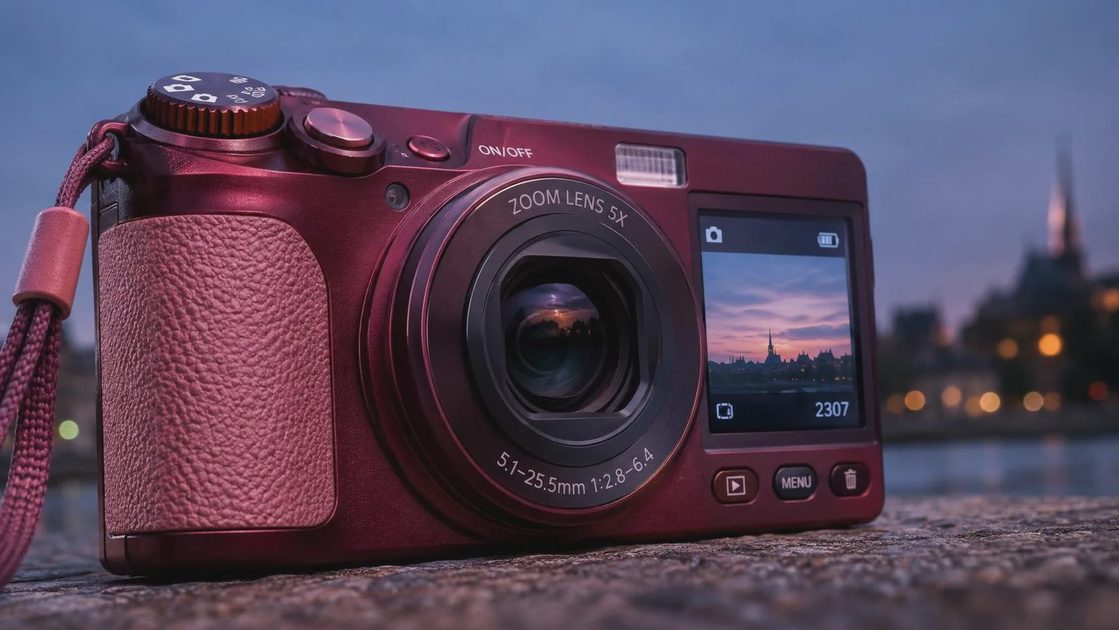
If your budget is near $500, look for a clean used APS-C mirrorless body with its kit lens. Canon EOS M models, Sony a6000-series cameras, and older Nikon DSLR kits can all teach exposure and composition, though the long-term lens path differs. Spend the savings on a spare battery and a small prime rather than chasing a higher body number.
Near $700 to $900, a new Canon EOS R50 kit, a Sony ZV-E10 kit, or a used Fujifilm X-S10 can make sense for different reasons. The Canon is an easy all-rounder, the Sony favors creators who prioritize video, and the Fujifilm offers strong stabilization and comfortable controls. These are not interchangeable recommendations; your subjects should decide.
At any price, handle the camera before committing if you can. Your thumb should reach the controls without stretching, the viewfinder should not feel cramped, and the grip should remain comfortable after ten minutes. A good digital camera affordable in a specification table may be a poor personal fit if you dislike carrying it.
A calm way to make the final choice
Write down three nonnegotiables, such as a flip-out screen, an interchangeable lens, and reliable people autofocus. Then choose one feature you are willing to sacrifice. This prevents the shopping process from expanding into an endless search for a perfect body.
Compare the complete kit price, not just the camera listing. Include the lens, card, battery, charger, and any adapter you actually need. Read a manual or detailed review for controls and limitations, not just laboratory sharpness graphs. If two cameras produce similarly sized files, choose the one whose controls make you want to pick it up.
My own rule is simple: a good digital camera affordable enough to carry regularly beats an impressive camera left at home. Learn exposure compensation, practice focusing on a moving subject, and print a few photographs. The best camera is the one you understand, and understanding grows faster when the tool feels inviting rather than intimidating.