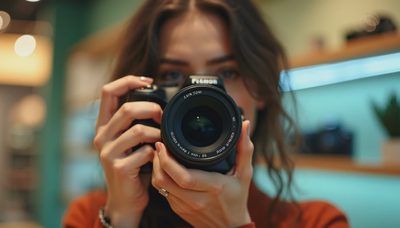
Can you zone focus with a Nikon D600 camera? Yes, and it is more practical than many owners expect. The D600 is a full-frame DSLR with an optical viewfinder, so if your lens has a distance scale and enough depth of field, you can pre-set focus and shoot quickly without waiting for autofocus to lock. That is handy for street work, travel, family outings, and any scene where timing matters more than absolute precision. The trick is not magic; it is understanding distance, aperture, and how much error your lens will forgive.
What zone focusing actually means
Zone focusing means setting a distance before the shot so the camera covers a useful slice of space. You are not trying to nail one razor-thin plane. You are choosing a range that is forgiving enough for real life. With a 35mm lens at f/8, that range can be wide enough for a person walking toward you, a shop window shot, or a quick candid on the sidewalk. The smaller the aperture, the deeper the zone. The longer the lens, the tighter it gets. That is the whole game.
Hyperfocal distance is just a more technical version of the same idea. Instead of aiming for a subject distance, you aim for the focus point that pushes depth of field as far as possible. You do not need to memorize the math to use it well. You only need to understand that a lens with a distance scale makes the process much faster and much less stressful.
Why the D600 is a workable body
The D600 is a good fit because it gives you an optical viewfinder, a full-frame sensor, and enough resolution to crop a little if your framing is not perfect. It does not give you focus peaking like a mirrorless body, but zone work does not require it. What helps more is the camera's compatibility with older Nikon glass, especially lenses that show a real distance scale on the barrel. Those are the lenses that let you set a distance by feel and then trust the frame.
If you are used to chasing autofocus points, this is a calmer way to shoot. You are deciding in advance where the action will happen, then staying ready. That is especially useful for sidewalks, markets, and casual documentary work where the subject moves in a predictable lane.
How to set it up without guessing
For can you zone focus with a Nikon D600 camera, the setup is simple once you stop thinking like a menu hunter and start thinking like a range finder user. Pick a distance you expect to work in. Then choose an aperture that gives you enough depth of field to cover your error. On a 35mm lens, f/8 is a friendly starting point outdoors. Focus on something at that distance, check it once in live view at magnification if you want reassurance, then return to the viewfinder and shoot. If the subject drifts a few feet closer or farther, your depth of field should still save the frame.
The main mistake is opening the lens too wide because the light looks nice. A wide aperture makes the zone thinner and punishes small errors. If you want the image to stay reliable, stop down first and raise ISO second. On the D600, ISO 1600 or 3200 is a better trade than missing the moment because the lens was too open.
Lens and aperture choices that make life easier
The easiest lenses for this are simple primes. A used Nikon 35mm f/2D usually gives you a comfortable field of view for street and documentary work. A 50mm f/1.8D is cheaper and more compact, but it asks for better distance judgment because the frame is tighter. Older 28mm and 24mm primes can also work well if you want a bigger safety margin. That extra width makes zone focusing easier because the depth of field opens up faster.
Price matters here because the camera body is only half the equation. On the used market, a 50mm f/1.8D often sits around $75 to $125, while a 35mm f/2D is commonly around $150 to $250. If you are buying from KEH, MPB, or a local shop, look for a clean distance scale, smooth focus ring, and no oil on the aperture blades. Those details matter more here than bragging rights.
What a starter kit looks like in the real world
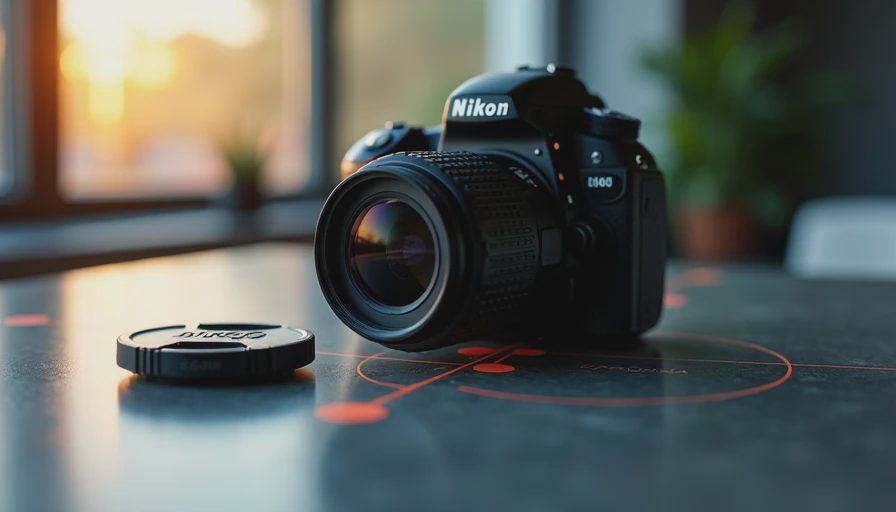
If I were building a no-drama starter kit for this body, I would choose a 35mm prime, set it to f/8, and spend one afternoon shooting the same sidewalk from three distances. That exercise teaches you more than any spec sheet. A 35mm lens on the D600 gives you enough context to tell a story while still being forgiving about distance. If you want a second lens later, a 50mm can be the tighter, more intentional option for portraits, storefront details, or compressed street scenes.
This is also where the full-frame sensor helps in a small but real way. You can crop modestly without the file falling apart, which gives you a little insurance while you are learning. It is not a substitute for good framing, but it does take some pressure off.
Where zone focus breaks down
Zone focus falls apart when the subject distance keeps changing or when you insist on shooting wide open. Indoor receptions, toddlers running straight at you, and dark rooms with moving people are bad jobs for this method. In those situations, autofocus is simply the better tool. That is not a knock on the D600. It is just a reminder that the best camera is the one you understand, and the best technique is the one matched to the scene.
The same is true for low light. If the shutter speed gets too slow, motion blur will get you before focus does. So the question is not whether the body can do it. The question is whether the scene gives you enough depth of field and enough light to make the method reliable.
A quick field test before a paid shoot
If you still wonder can you zone focus with a Nikon D600 camera, do a ten-minute test before you trust it on a paid shoot. Stand at a fixed spot, pick three distances, and shoot each one at f/8 and then again at f/11. Review the files at full size. You will quickly see how much margin your lens gives you and how much closer you can work before the frame starts to fall apart.
That little drill turns a vague idea into muscle memory. After a few sessions, you stop asking the camera to save you and start placing yourself where the shot lives. That is the real advantage of this method. It is not about being old-school. It is about making the camera disappear so you can move faster and think less about gear.