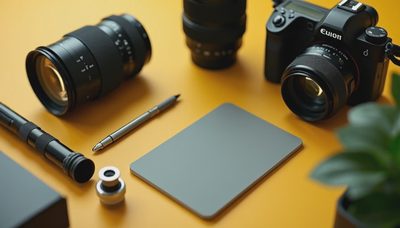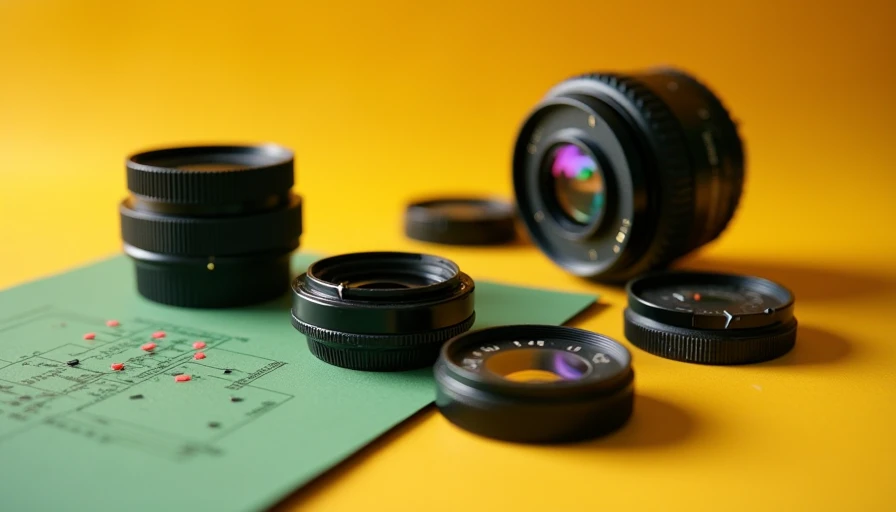
Canon FD lenses occupy a useful corner of the vintage-camera world. They are old enough to be affordable, plentiful enough to give you choices, and optically good enough to make beautiful photographs without turning every purchase into a collector's hunt. If you are adapting a lens to a Sony, Canon mirrorless, Fujifilm, or Micro Four Thirds body, canon fd lenses can also offer a slower, more deliberate way to shoot.
I say slower deliberately. These lenses generally focus manually, lack modern electronic communication, and often require you to set the aperture on the barrel. That sounds restrictive if you are used to autofocus, but it can be wonderfully direct. You turn a ring, watch the image change, and make the exposure yourself. The best camera is the one you understand, and these lenses can teach you quite a lot about how an image is made.
What makes the FD mount different
Canon used the FD mount primarily from the 1970s through the late 1980s, before moving to the autofocus EF system. FD lenses were designed for Canon's manual-focus film SLRs, including the popular AE-1, A-1, F-1, and several T-series bodies. They are not compatible with modern Canon EF cameras by simply twisting them into place, and an adapter is required for most mirrorless cameras.
There are two broad versions to know. Older breech-lock lenses have a separate locking ring that stays on the camera while the lens is mounted. Newer FD lenses use a more familiar rotating mount and are often called New FD or nFD lenses. Both can be excellent. The New FD versions are usually smaller and easier to handle, while some photographers prefer the solid feel and distinctive metal construction of earlier models.
The important detail is flange distance, which is the space between the lens mount and the film or sensor plane. FD has a relatively long distance compared with many mirrorless mounts, so straightforward adapters work well on mirrorless cameras. On a DSLR, infinity focus is more complicated, and adapters with corrective glass can reduce image quality. For most buyers, mirrorless is the sensible destination.
The focal lengths worth considering first
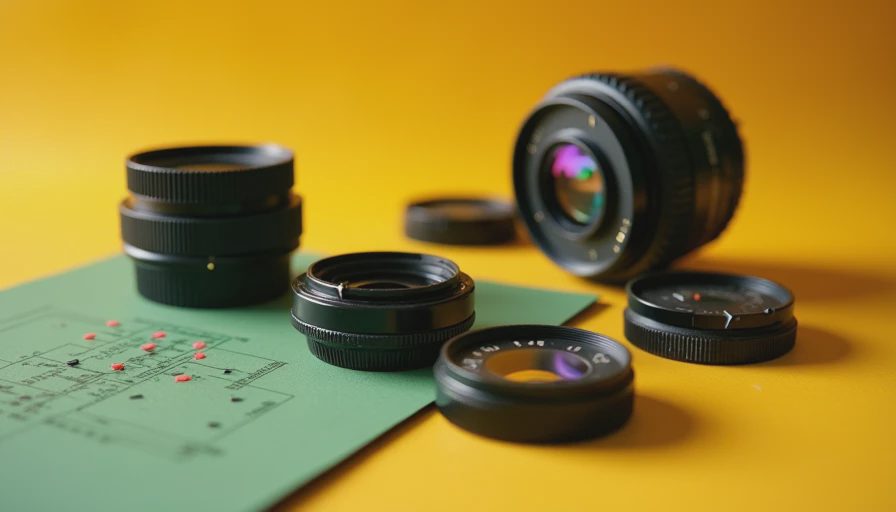
A 50mm lens is the natural starting point. The Canon FD 50mm f/1.8 is common, inexpensive, and capable of pleasing results when the focus is accurate. It is not a magical portrait lens, but on a full-frame digital camera it gives a familiar perspective for everyday scenes. The 50mm f/1.4 versions gather more light and create softer background blur, though prices and condition vary more widely.
The 35mm f/2 is a particularly useful option for street photography, travel, interiors, and environmental portraits. It shows more context than a 50mm without becoming as expansive as a wide-angle lens. A clean copy can cost more than the basic 50mm, but its versatility often justifies the difference.
For portraits, the 85mm f/1.8 and 100mm f/2.8 are worth researching. They give a comfortable working distance and can separate a subject from a distracting background. On APS-C cameras, remember that the crop factor narrows the field of view. A 50mm behaves more like a short portrait lens, while an 85mm may feel quite tight indoors.
Canon also made longer lenses, including 135mm models, plus specialty options such as the 35mm f/2.8 tilt-shift lens and several wide-angle designs. Those are interesting once you know what you need. Starting with a clean 50mm or 35mm is usually wiser than buying an impressive shelf of glass.
Adapters, metering, and the real shooting experience
Canon FD lenses have no electronic contacts for a modern digital camera. The camera cannot automatically know the selected aperture or lens focal length unless you enter that information manually. Fortunately, most mirrorless bodies handle the basics well. Set the camera to aperture-priority or manual exposure, enable the option that allows shooting without an electronic lens, and use focus peaking or magnification to confirm focus.
A basic adapter can cost roughly $15 to $40, while a better-machined adapter from a specialist manufacturer may cost $60 to $150. You do not need an expensive adapter to create a sharper image, but poor tolerances can cause wobble, light leaks, or difficulty removing the lens. A loose connection is not charming vintage character; it is a mechanical problem.
Metering is usually straightforward because the camera measures light through the lens. As you stop down, the viewfinder may become darker, depending on the camera and its settings. Focus wide open, where the image is brighter, then stop down before taking the photograph. This small sequence becomes automatic after a few outings.
How canon fd lenses look in photographs
People often describe vintage glass with words such as character, glow, and rendering. Those terms can be useful, but they are not measurements. In practical terms, many canon fd lenses produce good center sharpness, lower contrast than some modern lenses, and more flare when a bright light source enters the frame. The result can feel gentle rather than clinically crisp.
That is not always an advantage. For a commercial product image, I may want controlled contrast, corner detail, and consistent flare resistance. For a backlit portrait at the beach, a little veiling flare can make the image feel atmospheric. I have used older lenses when I wanted to pay attention to timing and composition instead of relying on autofocus to make every decision.
Wide-open performance varies by model and sample. A fast lens may be soft in the corners at its maximum aperture and improve noticeably by f/2.8 or f/4. A digital sensor can also reveal dust, haze, and alignment issues that were less obvious on film. Test the actual copy when possible rather than assuming every lens with the same name performs identically.
What to inspect before buying
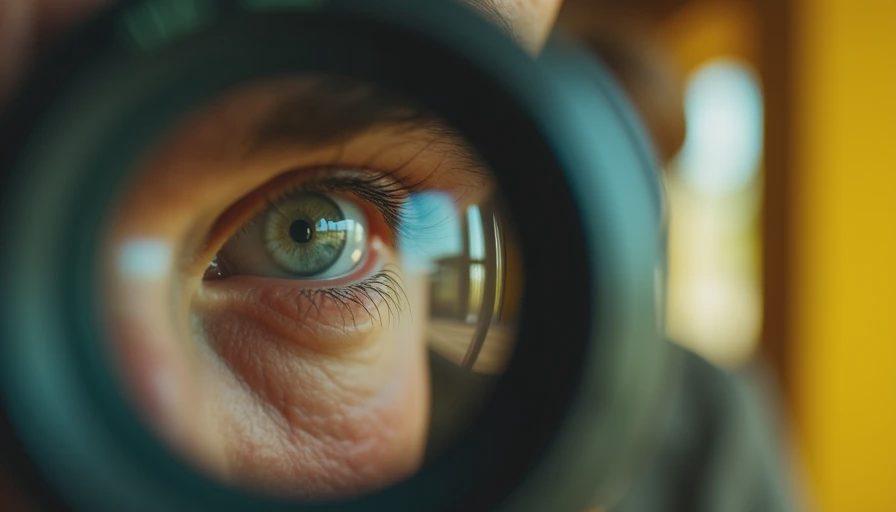
The first check is the glass. Hold the lens under a bright light and look for fungus, which appears as branching or web-like growth, and haze, which looks like a cloudy film. A few tiny dust particles are normal in a used lens and rarely affect a photograph. Deep scratches, separation around the edge of an element, or heavy internal haze are reasons to walk away unless the price reflects repair risk.
Next, turn every ring. Focus should move smoothly without grinding, and the aperture should click through its stops. On many FD lenses, the aperture blades should open and close promptly when you operate the lever or aperture control. Sticky blades can cause incorrect exposure. Check the mount for bent parts, missing screws, or damage to the breech-lock mechanism.
Ask whether the lens has been serviced, but treat vague claims carefully. A clean-looking exterior does not prove the optics are clear. Online prices can range from about $30 for a common 50mm f/1.8 to several hundred dollars for scarce, fast, or specialty models. A return policy is often worth more than a dramatic description of "museum condition."
A sensible starter kit
For a first kit, I would choose a 50mm f/1.8, a reliable adapter, and a small blower. Shoot that combination for a month before buying anything else. Photograph a person near a window, a street scene at dusk, a landscape stopped down, and a moving subject. Those tests will tell you whether manual focus, the focal length, and the lens's contrast suit your habits.
If you want one addition, choose based on the photographs you actually make. The 35mm f/2 is a strong general-purpose companion, while the 85mm f/1.8 makes more sense for portraits and detail. Canon FD lenses reward patience, not accumulation. You do not need every aperture or rare optical formula to make the experience worthwhile.
The appeal is ultimately practical: these lenses put physical controls in your hands and can produce distinctive images at reasonable prices. They will not replace a modern autofocus lens for every assignment, and they will not fix weak light or uncertain composition. But they can make you more attentive to both. Start with one clean lens, learn its limits, and let the photographs decide what you buy next.