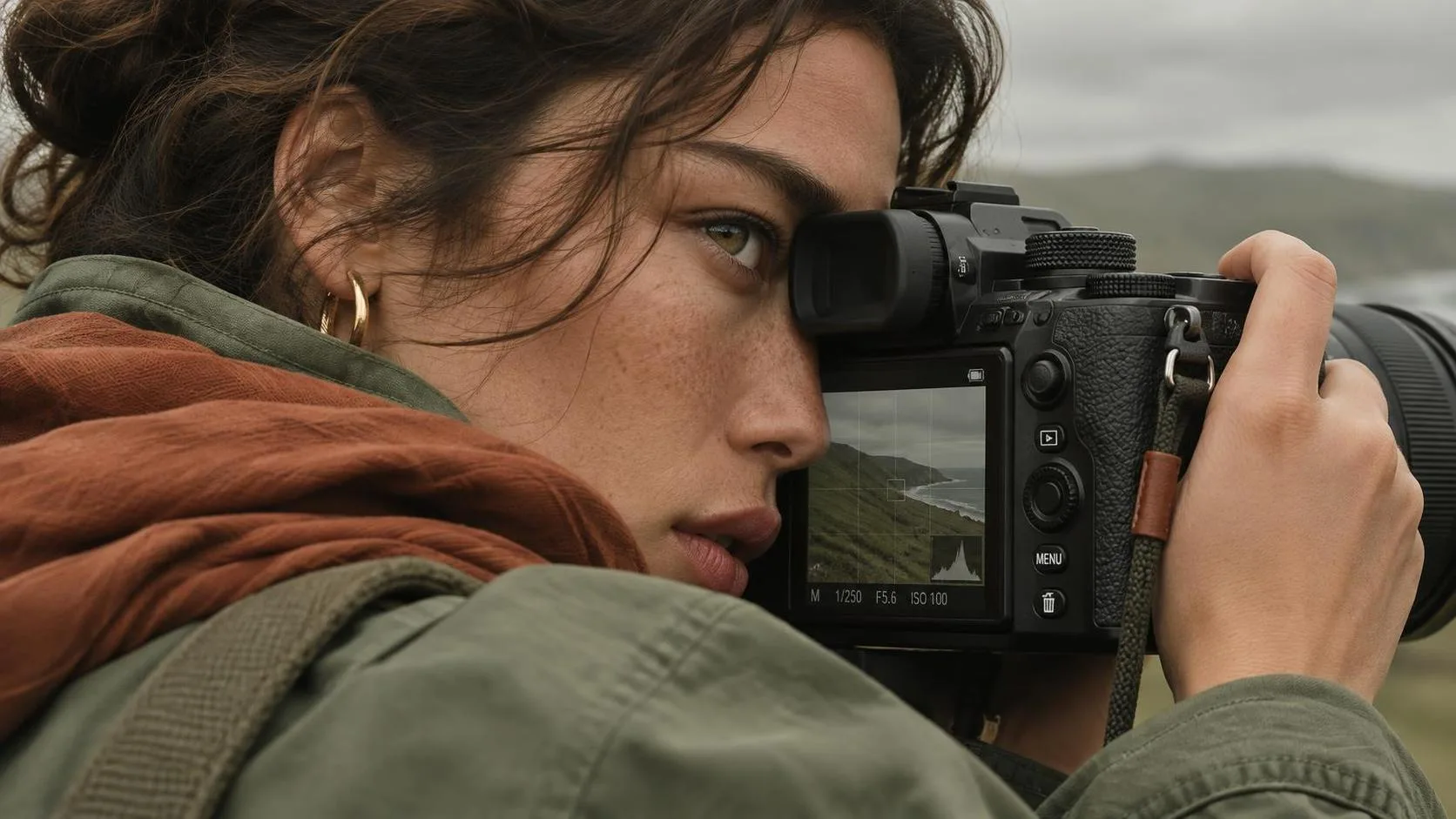
A pro mirrorless camera should make difficult assignments more dependable, not simply give you a longer spec sheet. For weddings and portraits, consider the Canon EOS R5 line; for fast action and a deep lens selection, look at Sony’s Alpha 9 line; for wildlife or sports with a substantial body and controls, consider the Nikon Z9. All are capable choices, but the best fit depends on what you photograph, the lenses you need, and whether you can afford a backup.
You don’t have to buy a flagship body to make professional photographs. A less expensive camera with a lens you know well can be a better working kit than an expensive body that leaves no room in the budget for lighting, storage, or repairs.
What makes a pro mirrorless camera different?
Mirrorless cameras send the image from the sensor to an electronic viewfinder or rear screen instead of bouncing light through a reflex mirror. What makes a model suitable for professional work is less about that design than the combination of controls, reliability features, and support around it.
Two card slots are useful when a job cannot be repeated. Many cameras let you record the same photo to both cards, so a single card failure is less likely to cost you the assignment. Check the recording options and card formats before buying; two slots alone don’t guarantee that every file type can be duplicated in every mode.
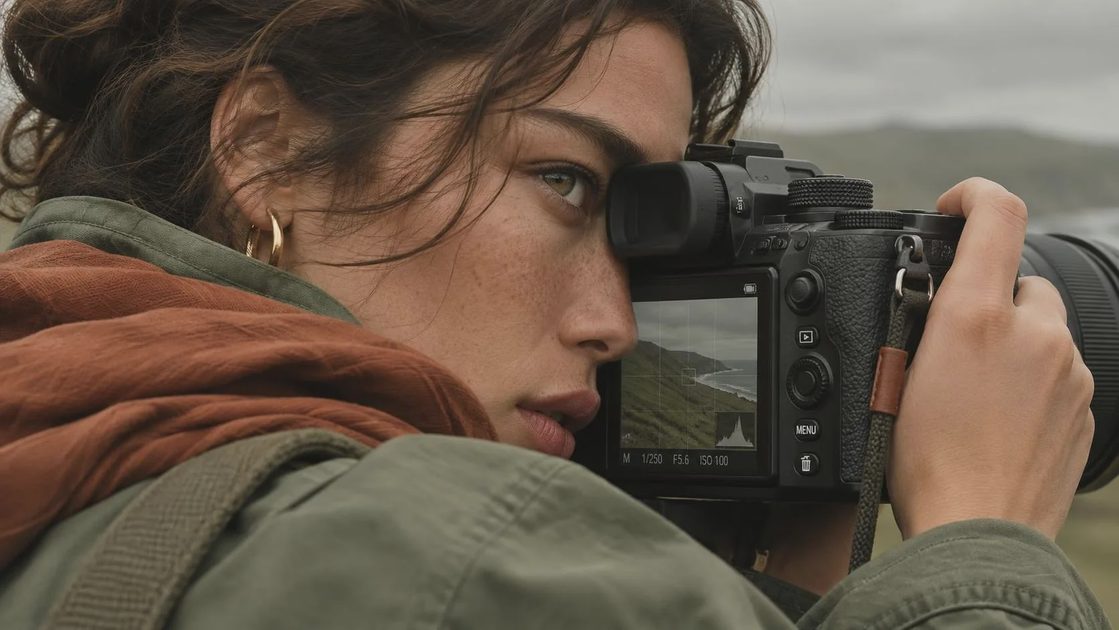
Also look for controls you can operate without taking your eye from the viewfinder, a grip that feels secure with your heaviest lens, and a battery system that will get you through the day with spares. Weather sealing can help in damp or dusty conditions, but it is not the same as waterproofing. The lens and how the camera is used matter, too.
Choose the system before the body
A pro mirrorless camera is only one part of a system. Start by listing the two lenses you actually need, then check their cost, weight, and availability in the mount you’re considering. A mount is the physical connection between the camera and lens; different systems have different native lens choices.
For event work, that list might start with a standard zoom and a bright portrait lens. For wildlife, the long telephoto may cost more than the body, and carrying it comfortably can matter as much as its maximum reach. Sony’s E-mount system offers a broad range of lenses, including options from other manufacturers. Canon RF and Nikon Z also have extensive systems, though the exact third-party choices vary by mount and lens type.
If you already own lenses you like, investigate adapters before switching systems. Some preserve autofocus and electronic aperture control, while others require manual operation. Compatibility can also vary with the particular lens and adapter, so check both manufacturers’ guidance rather than assuming every feature will transfer.
Autofocus, resolution, and speed without the hype
Autofocus is the camera’s system for finding and maintaining focus. Subject detection can recognize things such as eyes, animals, or vehicles, depending on the model. For a moving subject, the important question is whether the camera can follow it in the light and with the lens you use—not merely how many subject categories appear in a menu.
Resolution is the number of pixels in an image. More pixels give you more room to crop or make large prints, but they also produce larger files that take more storage and processing time. For many portraits, events, and web deliveries, a moderate-resolution sensor is plenty. Choose higher resolution when your actual output or cropping habits justify it.
Burst rate tells you how many frames a camera can capture per second. It can help with unpredictable action, but a fast burst also fills cards quickly. Look at the buffer as well: that’s the camera’s temporary memory for images while it writes them to the card. A high advertised rate is less useful if the camera slows down before the important moment.
Check the shutter and video requirements
When comparing a pro mirrorless camera for action, distinguish between its mechanical and electronic shutters. A mechanical shutter uses moving parts to control exposure; an electronic shutter reads the sensor without relying on that movement. Electronic shooting can be quiet and fast, but on some cameras it can distort quickly moving subjects or create bands under certain artificial lights. These effects depend on the camera and conditions, so look for examples made under lighting like yours.
For video, start with the finished project rather than the biggest resolution number. Check the recording format, available frame rates, microphone and headphone connections, and any recording limits. If you film long interviews or ceremonies, find out how the camera handles heat and continuous recording in conditions similar to yours. A camera that excels at short clips may not be the right tool for an uninterrupted event.
Budget for the job, not just the body
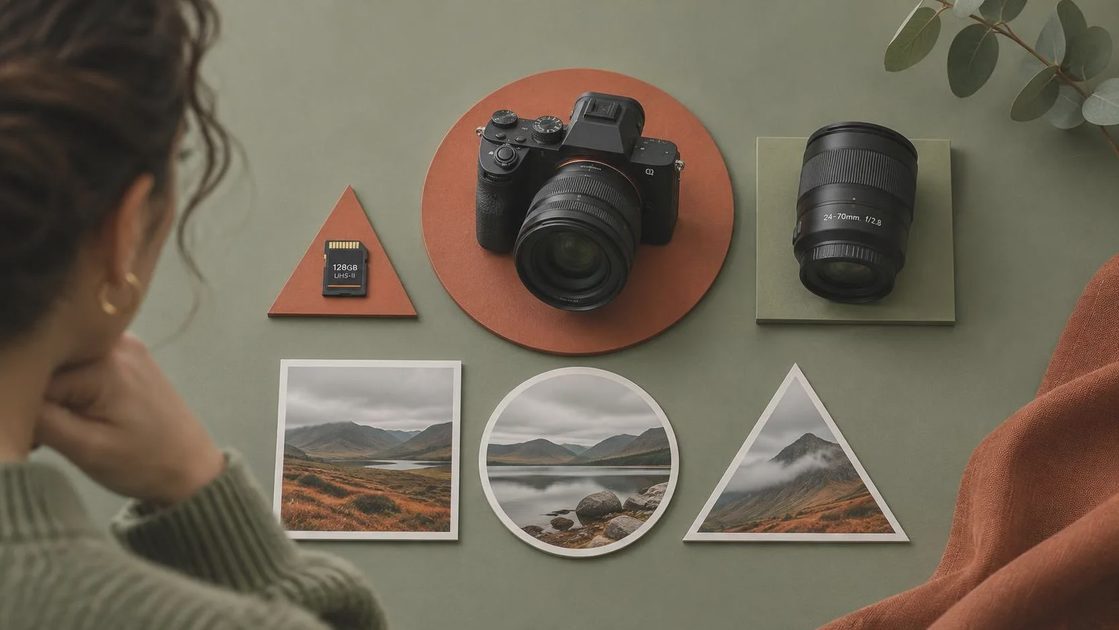
Before buying a pro mirrorless camera, price the complete kit: lenses, cards, spare batteries, a charger if needed, storage drives, and a way to carry everything. Fast cards can be particularly important for demanding burst or video modes, but buy the type and speed your chosen camera actually requires.
For paid, unrepeatable work, think through what happens if a body or lens stops working. A backup doesn’t have to match your primary camera, but it should accept a useful lens and produce files you can deliver. Renting a second body for an occasional assignment can be more sensible than buying one immediately.
Used equipment can stretch the budget, especially if the seller offers a clear return policy. Inspect the sensor and mount, test the buttons and card slots, and ask about service history. Shutter count can be one clue on cameras that report it, but it doesn’t reveal every kind of wear.
Finally, hold the camera if you can. Change the focus point, adjust exposure, review a photo, and navigate the menus. If those ordinary actions feel awkward, another capable body may serve you better. The best camera is the one you understand.