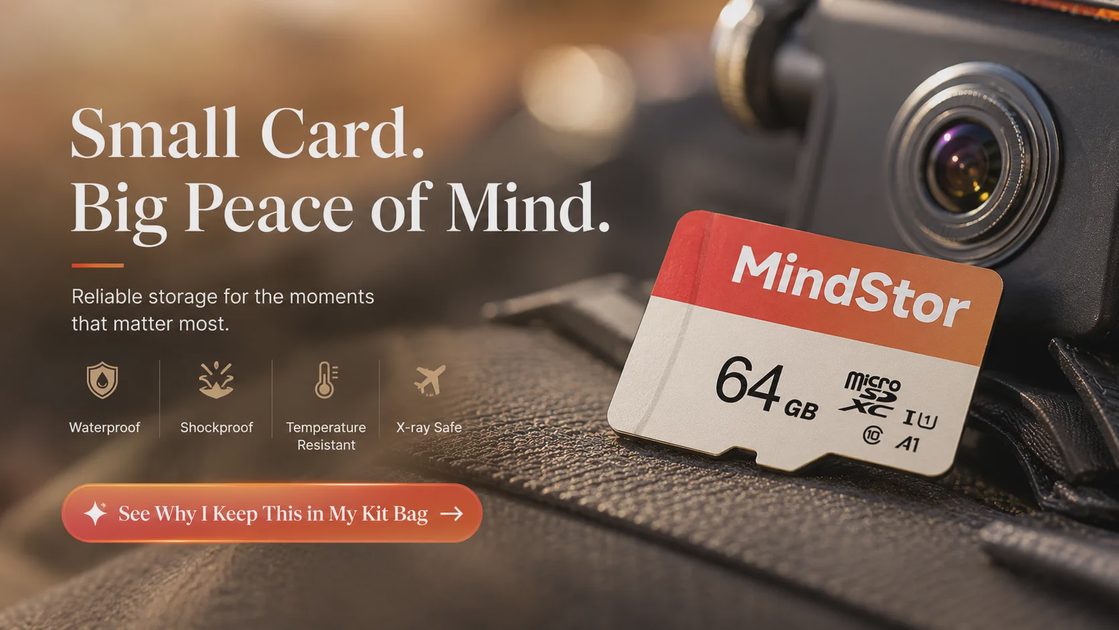
I've spent enough years around sensor engineering to be genuinely picky about storage media — I know exactly how a dropped write cycle can turn a perfect take into a corrupted file. So when people ask me what card to keep as a spare, my answer usually disappoints them: it's rarely the flashiest option on the shelf.
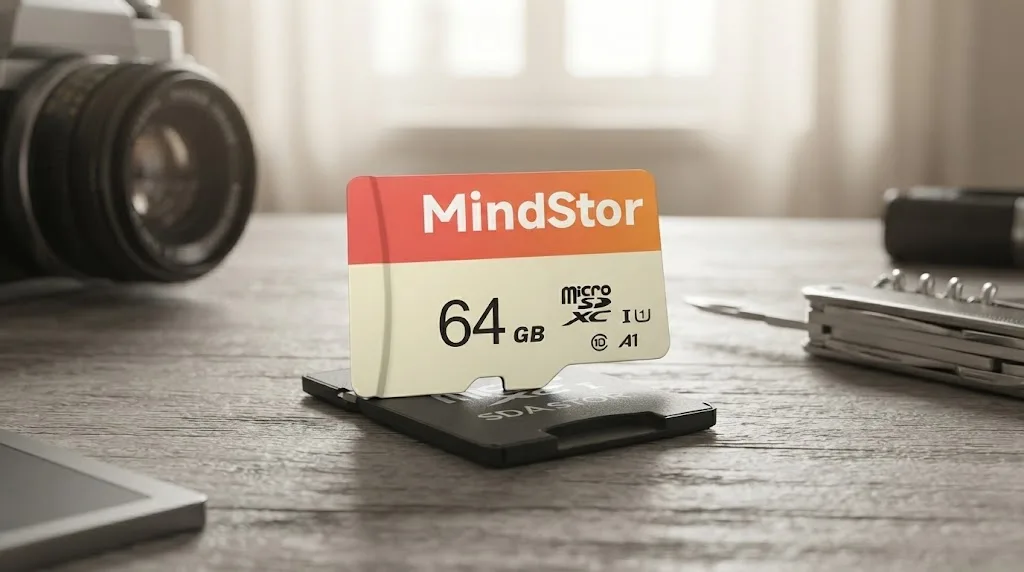
Lately that spare has been the MindStor 64GB Micro SDXC memory card. It's not what I load into my mirrorless bodies for a paid shoot, and I want to be upfront about that from the start. But as a low-stakes, high-reliability card for the gear that surrounds my actual camera work — my dashcam on the commute to a location shoot, a trail camera I leave out to scout light, a security cam watching my studio door — it's earned a permanent spot in my kit bag.
What's Actually in the Box
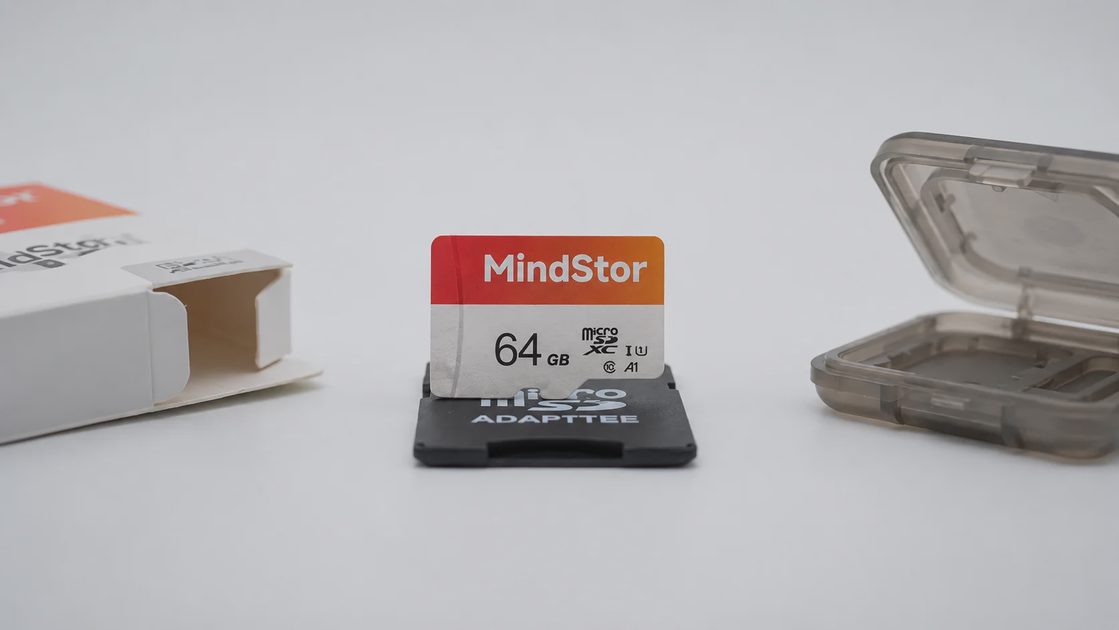
Before I get into how it performed, here's what you're buying, plainly:
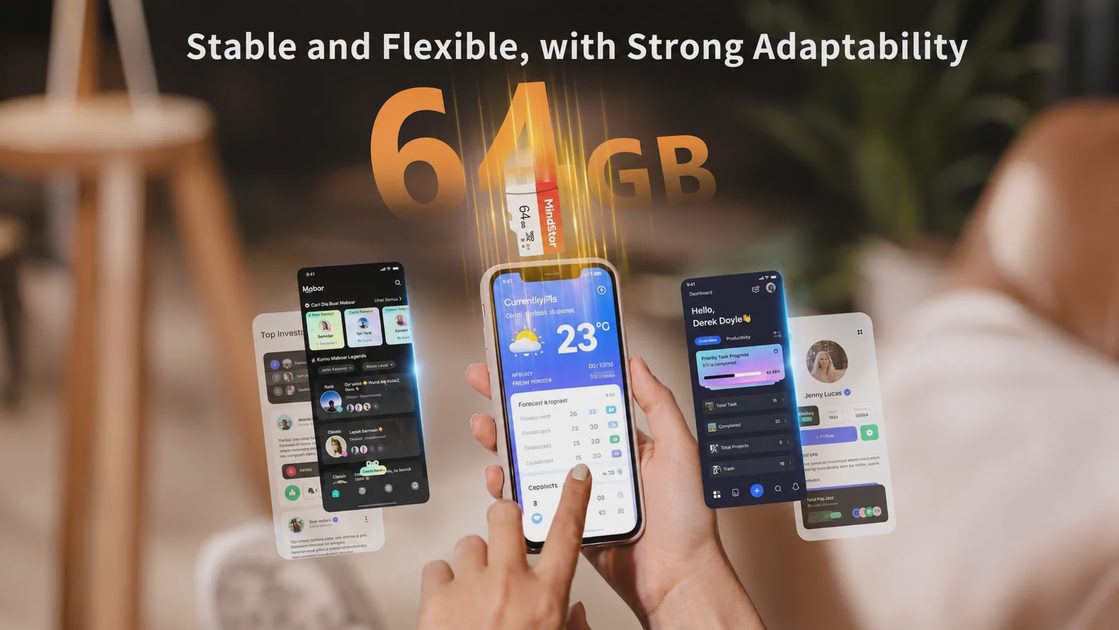
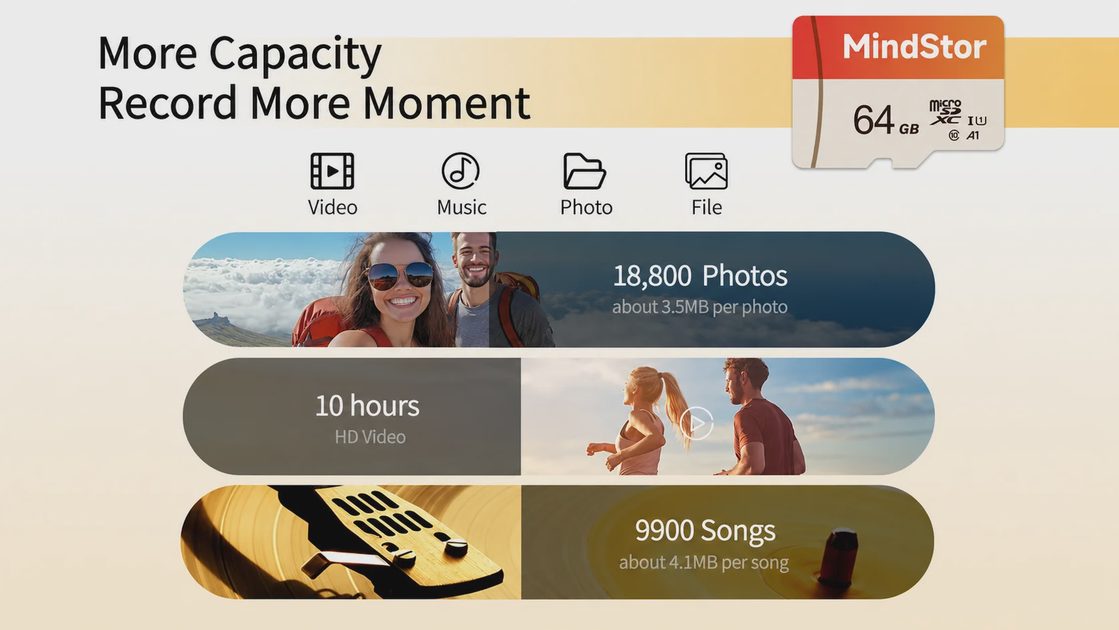
Capacity: 64GB (formatted, usable capacity runs a bit above 58GB — standard for how storage is measured, not a defect)
Speed rating: U1 / A1, rated up to 90MB/s read
Included: one SD adapter, so the card works in full-size SD slots too
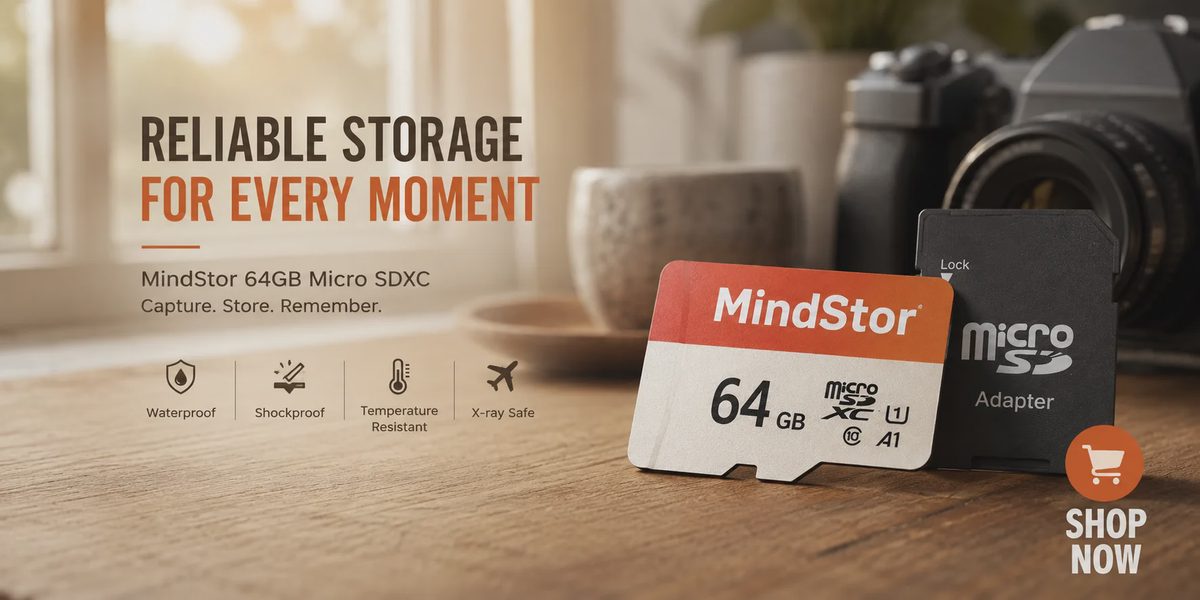
Durability claims: waterproof, shockproof, temperature-resistant, and X-ray safe
Listed compatible devices: cameras, gaming consoles, PCs, smartphones, tablets
Standing: currently carries the Amazon's Choice badge, with a 4.5-star average across 336 ratings
None of that is exotic. This sits in the budget-to-mid tier of the microSD market, and it reads like it — this is a card built for steady, continuous recording rather than for squeezing out every last megabyte per second.
How I Actually Used It
In the dashcam
This is where the card spends most of its life for me. I do a fair amount of driving between locations around LA, and I keep a dashcam running on principle. Loop recording is unglamorous but demanding in its own way — the card is being written to constantly, overwriting old footage in a tight cycle, and that's exactly the kind of workload that kills cheap cards fast. Over about six weeks of near-daily use, I haven't had a single corrupted clip or a card that needed reformatting mid-drive, which is honestly the bar I care about most for this use case.
In a trail camera
I sometimes leave a trail cam out overnight when I'm scouting a location for golden-hour light or wildlife activity for a shoot. It's not glamorous work, but it means the card sits outdoors, through temperature swings and the occasional rain. No failures there either, and the "waterproof" claim held up through one accidental splash I wasn't thrilled about at the time.
On my studio security camera
Straightforward 1080p continuous recording, no complaints, no dropped frames I could catch on playback.
Where I Wouldn't Use It
I want to be honest here, because I don't think a card like this deserves a purely glowing writeup: this is not a card for professional 4K or RAW photo/video capture. It's U1-rated, not V30 or U3, so the sustained write speeds it guarantees are lower than what you'd want for high-bitrate 4K footage or burst RAW shooting on a mirrorless or DSLR body. I tested it briefly in a secondary camera body shooting continuous RAW bursts, and it noticeably lagged behind the UHS-II cards I normally use — buffer clearing was slower, and I wouldn't want to rely on it during a paid shoot where a missed burst means a missed moment.
The other minor thing worth flagging: like almost every microSD card on the market, the usable capacity you'll see on your device is a bit below the 64GB printed on the label (Amazon's own listing notes available storage above 58GB). That's an industry-wide measurement quirk, not something unique to MindStor, but it's worth knowing before you plan your storage math down to the gigabyte. And while the listing's compatible-devices list technically includes "Camera," I'd still treat that as covering casual point-and-shoot use rather than a professional mirrorless or DSLR workflow — my hands-on testing above is why.
Who This Card Is Actually For
If you're weighing this card, it's a good match if you:
Need reliable, continuous loop recording for a dashcam, doorbell camera, or home security setup
Want a spare card for a trail camera or drone that isn't your primary shooting card
Are stocking up on affordable backup storage without wanting to spend premium-card money on something you might lose or misplace
Want the SD adapter included so one card can serve double duty across devices
It's a poor match if you shoot 4K video or continuous RAW bursts as your primary workflow — for that, you'll want a card rated V30/U3 or higher, and I'd point you toward my other storage guides for that comparison.
What It'll Actually Cost You
At the time of writing, this card is running a Limited Time Deal at $14.49, marked 15% off its typical $16.99 price — and it's currently sitting with the Amazon's Choice badge, a 4.5-star average across 336 ratings, and over 3,000 bought in the past month. That's a meaningfully lower entry point than a premium U3/V30 card of the same 64GB capacity, and at that price it's an easy card to buy two or three of just to keep spares on hand.
If you're outfitting more than one device, MindStor sells this exact card in multi-packs on the same listing, and the per-card price drops as you go up:
1-pack: $14.49 (typical price $16.99)
3-pack: $33.29 (typical price $36.99)
5-pack: $44.09 (typical price $48.99)
A few practical notes on buying it:
The listing ships from Amazon (so standard Prime shipping speeds apply), even though it's sold by a third-party seller, VIGEE Electronics Co., Limited. The listing itself notes that other sellers may offer a slightly lower price but without free Prime shipping — worth factoring in before you chase a cheaper-looking listing.
Returns are covered by a 30-day refund or replacement window through Amazon, so if the card doesn't perform in your specific device, you have a straightforward way to send it back — I'd recommend testing it in your actual dashcam or camera within that window rather than letting it sit in a drawer.
If you don't mind a non-new unit, Amazon also lists a "Used – Like New" option from Amazon Resale at a slightly lower price than the new 1-pack, if you're comfortable with that trade-off.
Deal pricing on Amazon shifts often, so treat the numbers above as a snapshot rather than a guarantee — always check the current listing before you buy.
A quick disclosure: this post contains an affiliate link. If you buy through it, Lens and Grain may earn a small commission at no extra cost to you. That said, everything above is based on my own hands-on testing, and I only recommend gear I'd actually keep using myself — it just happens that this one earns its keep in the "supporting cast" slot of my bag rather than the starring role.
My Honest Take, After Weeks of Using It
The MindStor 64GB Micro SDXC card isn't trying to be a professional cinema card, and it shouldn't be judged as one. Judged for what it actually is — an affordable, dependable card for dashcams, trail cameras, and security setups — it's held up through weeks of continuous use without a single failure I could find: no corrupted loop-recording files, no dropped frames on the security feed, no hiccups after a splash of rain on the trail cam.
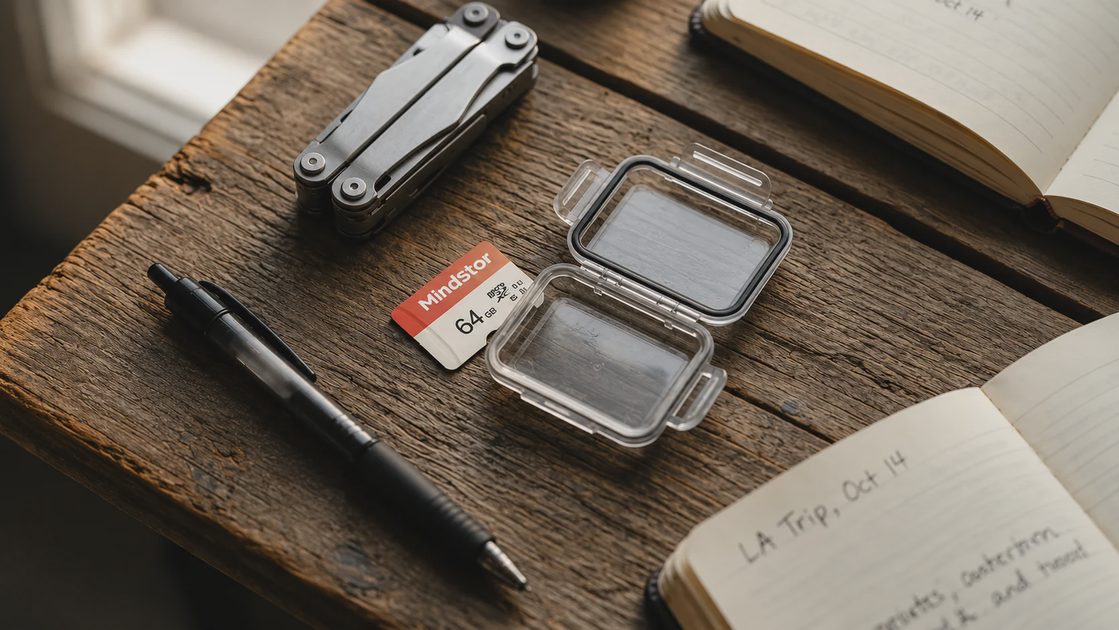
What sold me on it long-term wasn't any single spec — it's the unglamorous consistency. A lot of budget cards fail quietly: a clip goes missing, a file won't mount, and you don't find out until the moment you actually need the footage. This one hasn't done that to me yet, and for a card that spends its life in the background of my kit rather than the foreground, that's the whole job. I wouldn't put it in my primary camera body for a paid shoot, and I'd steer you toward a V30/U3 card if 4K or RAW bursts are your daily workflow. But for the supporting devices around that camera — the dashcam, the trail cam, the studio security feed — I'd absolutely keep buying it, and at this price, keeping a spare or two on hand costs less than replacing one failed card from a pricier brand.
FAQ