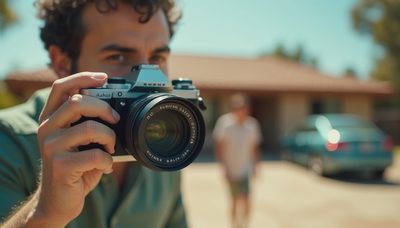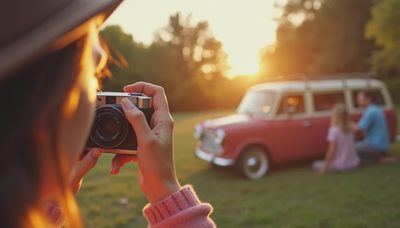
The canon ae1 is one of those cameras that can look almost too simple on a shelf: a black-and-silver 35mm body, a few dials, and a small viewfinder. Yet its simplicity is exactly why it remains appealing. You can learn the controls in an afternoon, load widely available film, and make photographs without navigating menus or firmware updates. I have used many more advanced cameras for paid work, but I understand the affection for this one. The best camera is the one you understand.
Why the canon ae1 still matters
Introduced in 1976, the canon ae1 helped make automatic exposure accessible without turning photography into a point-and-shoot experience. Its shutter-priority system lets you select a shutter speed while the camera chooses an aperture. In plain English, you decide how motion should look, and the meter selects the lens opening needed for the available light.
That arrangement is useful for learning. A shutter speed around 1/500 second can help freeze a cyclist or a running child, while 1/30 second can show movement as blur. The camera communicates through a needle in the viewfinder, so you can see when your chosen setting is likely to produce an underexposed or overexposed frame. It is not as forgiving as a modern digital camera, but it teaches cause and effect very clearly.
The canon ae1 is also small enough to carry all day. With a 50mm f/1.8 lens, the complete kit is comfortable for street photography, travel, family gatherings, and portraits. The body does not offer autofocus, image stabilization, or instant playback. Those omissions are limitations, but they also remove distractions. You look, focus, set the speed, and take the picture.
Controls and shooting experience
Before buying film, spend time learning the controls. The shutter-speed dial sits on the top plate, and the lens aperture ring controls the amount of light entering the camera when you use a compatible lens manually. The film advance lever moves the frame forward after each exposure. The rewind crank returns the film to its cartridge when the roll is finished.
The canon ae1 uses a light meter powered by a small battery. Look through the viewfinder and half-press the shutter button. The meter needle indicates whether the selected shutter speed and the lens setting are a reasonable match. If the needle points toward a slower exposure, hold the camera steadily or open the aperture. If it indicates a faster exposure, close the aperture or choose a quicker shutter speed.
For a first roll, I would use ISO 400 color film outdoors and in ordinary indoor light. Kodak Gold 200 can produce warm daylight color, while Kodak Ultramax 400 gives you more flexibility when clouds arrive. Ilford HP5 Plus is a forgiving black-and-white option. Film and processing costs often add $15 to $30 per roll, so write down your settings in a notebook. Those notes turn surprises into useful lessons.
Common problems in an older body
Age matters more than the camera's reputation. A used canon ae1 may have dried foam around the mirror or film door. The foam helps block stray light and cushion the mirror, and replacement kits are inexpensive, although installation requires patience. A repair shop might charge roughly $75 to $150 for basic light-seal work, depending on the camera's condition.
Check the battery compartment for corrosion, then test the meter with a fresh battery. Watch for a shutter that sticks, a film advance lever that feels unusually rough, or a shutter curtain with visible wrinkles. Inspect the lens for haze, fungus, deep scratches, and oil on the aperture blades. A small amount of dust inside an older lens is usually less serious than cloudy haze or sluggish blades.
The canon ae1 should not be judged only by whether it powers on. Fire it at several shutter speeds, advance the film transport, and confirm that the self-timer releases smoothly if the model has one. Ask for a sample negative or scan when possible. A clean-looking exterior can hide mechanical problems, while a scarred body may work perfectly.
Canon AE1 lenses worth considering
The most sensible first lens is the Canon FD 50mm f/1.8. It is compact, bright, and generally affordable. On a 35mm film frame, 50mm gives a natural perspective that works for portraits, details, and everyday scenes. The faster FD 50mm f/1.4 gathers more light and creates softer background blur, but it often costs more and is not essential for learning.
A 28mm lens is useful for interiors, architecture, and travel scenes where you need a wider view. The 35mm focal length sits between wide and normal and is a strong choice for documentary-style work. For portraits, an FD 85mm or 100mm lens can create flattering perspective, but these lenses are larger and often pricier than a beginner needs.
Remember that Canon made several FD lens versions, including breech-lock and later bayonet-style designs. They are intended for FD-mount cameras, not modern Canon EOS bodies without an adapter. Do not buy a lens simply because the word Canon appears on it; confirm the mount and inspect the glass.
Buying a canon ae1 without overpaying
Prices vary widely because online listings often confuse a tested camera with an untested collectible. A working body with a common 50mm lens may sell for approximately $100 to $250, while a recently serviced example can cost more. A camera described as “untested” should be priced as a repair project, not as a bargain.
When meeting a seller, bring a battery, a small flashlight, and a lens cloth. Test every shutter speed, open and close the aperture, examine the battery compartment, and check that the film door closes firmly. Look through the viewfinder for severe haze. Ask whether the meter, shutter, and light seals have been serviced. Ten minutes of testing can prevent a repair bill that exceeds the original purchase price.
If you buy online, choose a seller who shows clear photographs of the mount, shutter curtain, battery compartment, and lens surfaces. Return protection is valuable because intermittent meter faults may not appear in a listing photo. A camera shop that provides a short warranty can be worth the extra $40 or $60.
Is it right for you?
The canon ae1 is a good fit if you want to slow down, learn exposure, and enjoy the physical process of film photography. It is less suitable if you need dependable autofocus, fast continuous shooting, or predictable results at a wedding. Film also creates a continuing cost that digital photography does not: every mistake consumes a frame, and development takes time.
For beginners, I recommend pairing the body with a 50mm f/1.8 lens, a fresh battery, one roll of ISO 400 film, and a simple notebook. Start in daylight, keep the shutter above 1/60 second when handholding, and check the meter before every exposure. After the first roll, review the negatives or scans alongside your notes.
The canon ae1 will not produce better photographs automatically than a modern mirrorless camera. What it can do is make each decision visible. That is valuable training, and it remains a pleasant reason to carry a camera. Buy a sound example, accept its limitations, and give yourself time to learn it. The best camera is the one you understand.