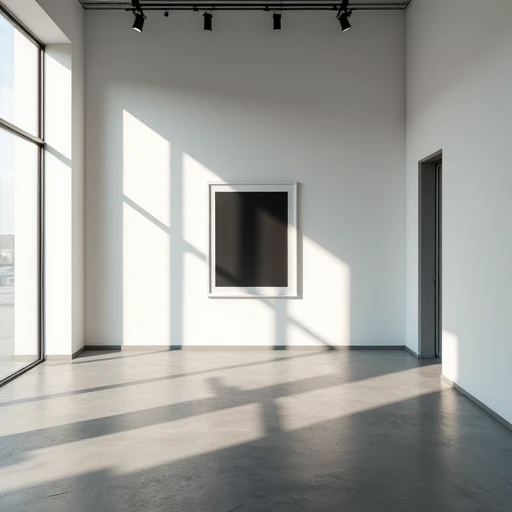
Most people move through a photography exhibition the way they move through a museum gift shop: quickly, politely, and with the sense that they should be impressed. They pause in front of the famous pictures, read the wall text, take a phone photo of the caption, and leave having collected the experience rather than examined it.
There is another way. You can walk through the same rooms as a student—someone who is there to learn how pictures are made, not simply to confirm that a well-known photographer is good. The difference is mostly attention and a few deliberate habits.
I go to exhibitions regularly. Some are major retrospectives; many are smaller shows. The method below is what I use when I want the visit to improve the way I see on my own jobs the following week.
Slow down before you start judging
The first impulse is to decide whether you “like” a photograph. That impulse is usually too fast. Instead, stand still and ask a simpler question: What is the light doing?
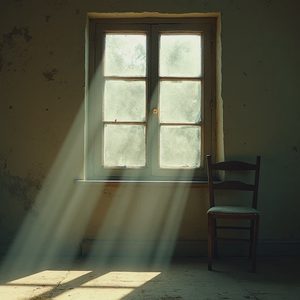
Is it hard or soft? Directional or flat? Does it fall across the subject or wrap around it? Is there a single clear source or a mix? Where are the brightest values and the deepest shadows? Spend a full minute with those questions before you move on to subject matter or composition. Light is the part of the picture that transfers most directly to your own work. Everything else is harder to borrow.
Look at the edges and the background
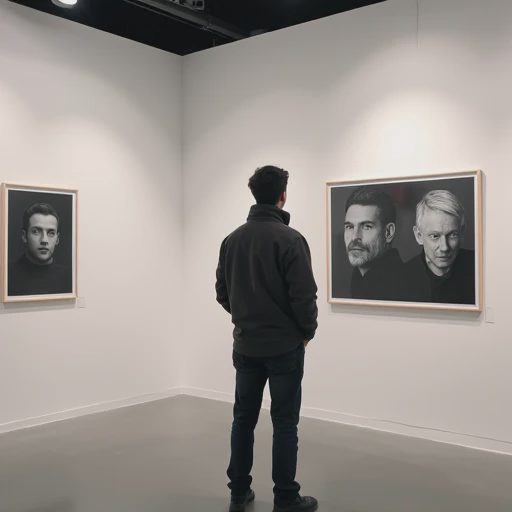
Tourists look at the face or the main subject. Students look at the parts of the frame that did not have to be there.
What is happening at the edges of the picture? Is the background clean, busy, or carefully discontinuous? How far is the subject from the background, and what does that distance do to the sense of space? Photographers who are good at this make the surrounding information feel inevitable rather than accidental. Noticing how they do it trains your own eye to edit the world before you raise the camera.
Reverse-engineer the practical decisions
Once you have looked at the light and the frame, ask the working questions:
Where was the camera relative to the subject—high, low, close, distant?
What focal length range does the perspective suggest?
Was the shutter speed likely fast or slow? Is there any sign of subject movement or camera movement?
How much of the final look was probably decided later in printing or processing versus at the moment of exposure?
You will not always get the answers right. The point is not forensic accuracy. The point is to practice thinking like the person who had to make choices under real constraints.
Spend more time with the pictures that bother you
The images you immediately admire are often the ones that confirm what you already know. The images that feel awkward, too quiet, or strangely framed are usually the ones that contain a decision you have not yet learned to make. Stay with those longer. Try to articulate what feels off and then consider why the photographer might have accepted that feeling as the cost of something else they wanted.
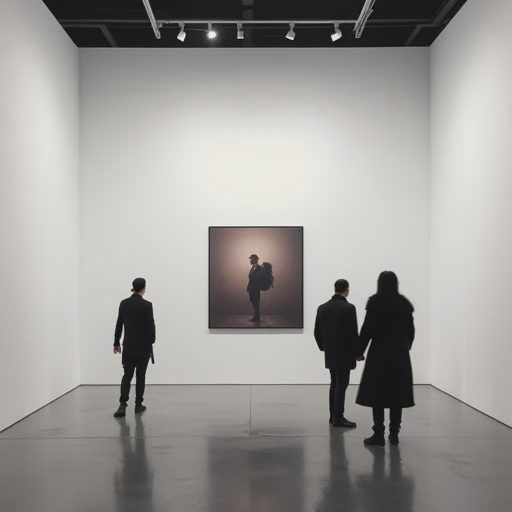
This is the opposite of the tourist impulse, which is to linger only on the crowd-pleasers.
Leave the camera in the bag
Taking phone pictures of the prints or the wall labels is fine for later reference. Making your own photographs inside the exhibition is usually a distraction. The goal of the visit is to improve your seeing, not to produce new files. If you need a record, take one clear photo of the caption and move on. The real work happens while you are looking, not while you are documenting that you looked.
Bring one small question with you
Before you enter, decide on a single thing you want to study. Examples: “How are they handling mixed color temperature?” or “How close do they stand when the subject is a person?” or “What do the quiet pictures have in common?” One question is enough. It keeps the visit from turning into a vague search for inspiration.
After you leave
Write down three specific observations while they are still fresh—nothing longer than a few sentences each. Then, on your next shoot, try to apply one of them deliberately. The exhibition only becomes useful when something from it changes a decision you make with your own camera.
You do not need to visit every show. You only need to visit the ones you do attend with the intention of leaving slightly better at noticing. The famous names on the wall are secondary. The light, the distances, and the choices are the curriculum.
The best camera remains the one you understand. Understanding improves when you study how other people have already solved the same problems you face every time you work.