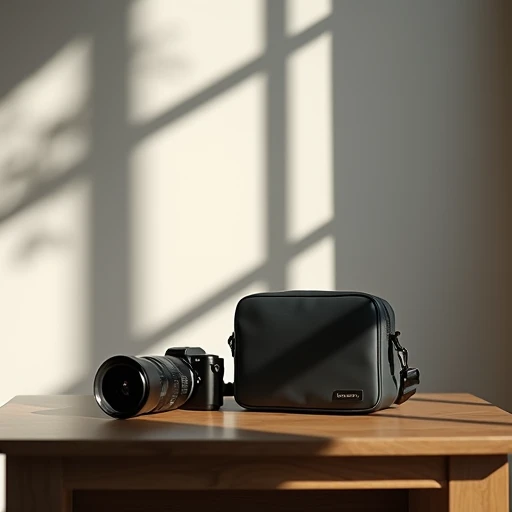
I used to pack for travel as if every possible photograph might appear and demand a different lens.
The bag was heavy, the decisions were constant, and a surprising number of the extra items never left the padded slots.
These days I pack far less. A typical weekend—three or four days in a city or a small town—fits in a small shoulder bag that does not make me calculate every movement. The photographs have not suffered. The walking and the attention have improved.
Here is exactly what I carry and why.
The fixed list
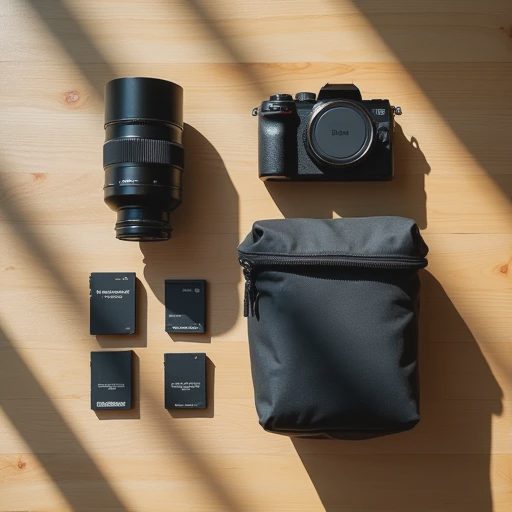
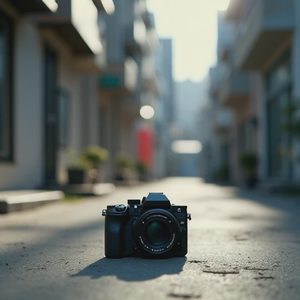
One camera body
The workhorse. Not a backup body. One. I accept the small risk that something could go wrong because the weight and mental simplification are worth more to me than the insurance of a second body on short trips.
One or two lenses, chosen in advance
Most weekends I take a single 35mm-equivalent prime. If the place or the work suggests more flexibility, I add one other lens—usually a short telephoto or a modest wide. I decide before I leave, not while standing in front of the bag. Two lenses is the upper limit for a weekend. One is often enough.
Two batteries and a charger
One in the camera, one spare. I charge every night. I have never needed a third battery on a weekend of ordinary shooting.
Two memory cards
Formatted and ready. I rotate them so that a single card failure cannot erase an entire day.
A plain strap and a small, unremarkable bag
Nothing that advertises expensive equipment. The bag is light enough that I forget I am carrying it for long stretches.
That is the entire photographic kit.
What I deliberately leave at home
The zoom that covers every focal length “just in case.”
The fast prime I rarely use at its maximum aperture on the street.
The flash.
The extra body.
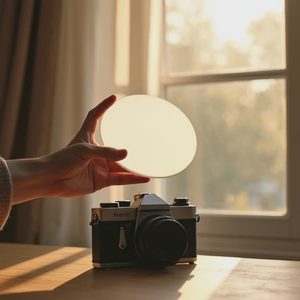
The filters I thought I needed for one specific effect.
The cleaning kit beyond a single cloth and a blower.
Each of those items has, at some point, traveled with me and returned unused. Their main contribution was weight and the quiet pressure to justify having brought them.
How the limitation changes the days
With less gear I walk more and hesitate less. There is no ongoing negotiation about which lens would be slightly better for the next scene. The camera stays in my hand or at my side instead of being buried in a larger bag that I am reluctant to open in public.
I miss certain frames. A longer lens would have isolated a detail on a distant building. A wider lens would have taken in more of a narrow alley. I accept those losses. What I gain is consistency of perspective and more time spent looking instead of managing equipment.
The photographs from these lighter trips tend to feel more coherent. They share a single way of seeing rather than a collection of different optical solutions to every situation.
A simple way to test this yourself
Before your next short trip, choose the one or two lenses you use most often and leave everything else at home. Pack the batteries and cards you actually need. Then notice, at the end of each day, what you reached for and what you never touched.
Most people discover that the extra items were solving anxiety rather than real photographic problems. The anxiety shrinks once you experience a few days without them.
I still own more lenses than I travel with. They earn their place on specific jobs that require them. For ordinary travel and the kind of looking that happens between planned shoots, the smaller kit is the one that gets used—and the one that keeps the weekend about the place rather than the equipment.
The best camera remains the one you understand. Sometimes the clearest understanding comes from leaving most of the options at home and working with what is left.